Why dots?
On the dot, the stripe, and the off-beat.
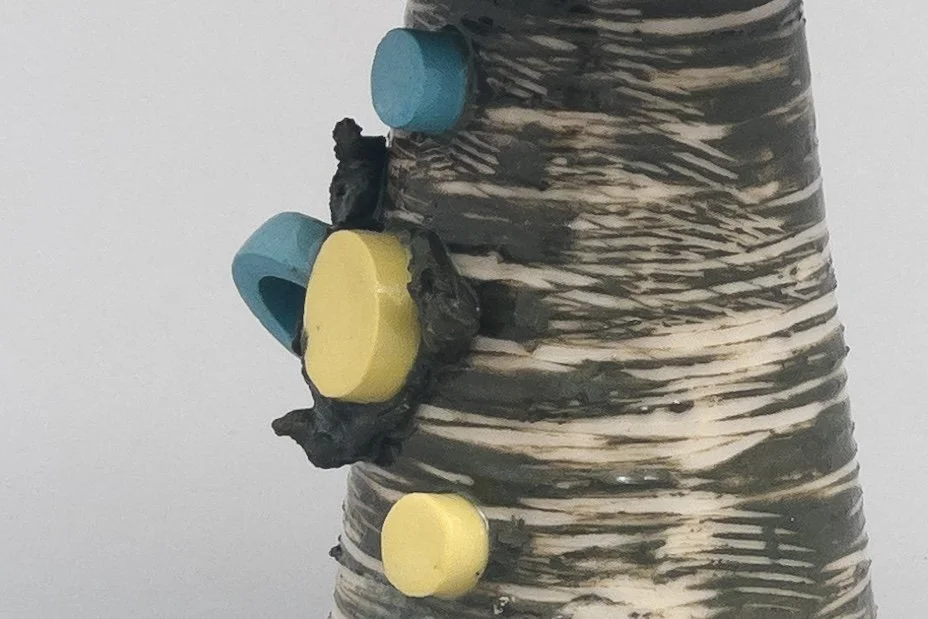
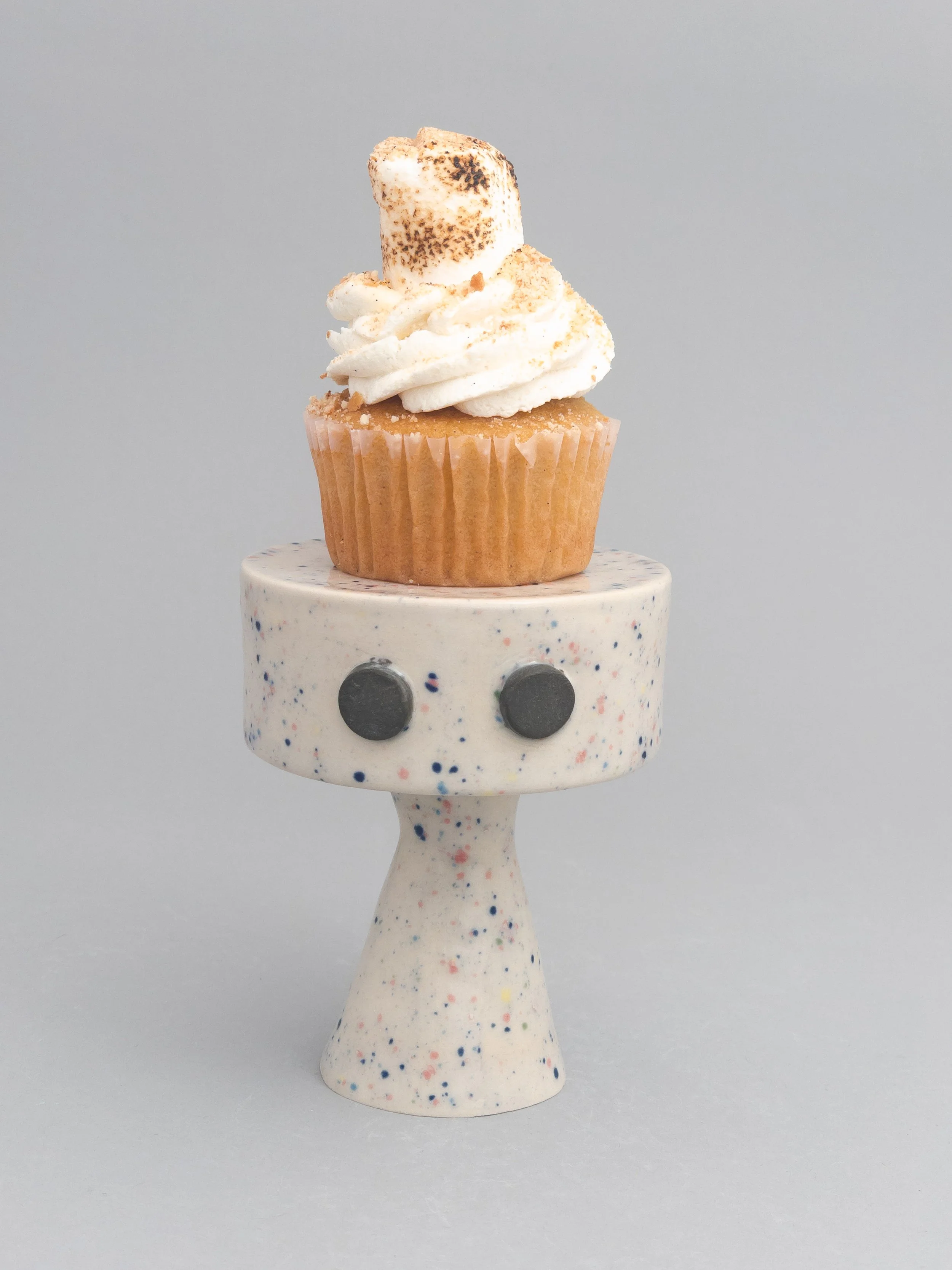
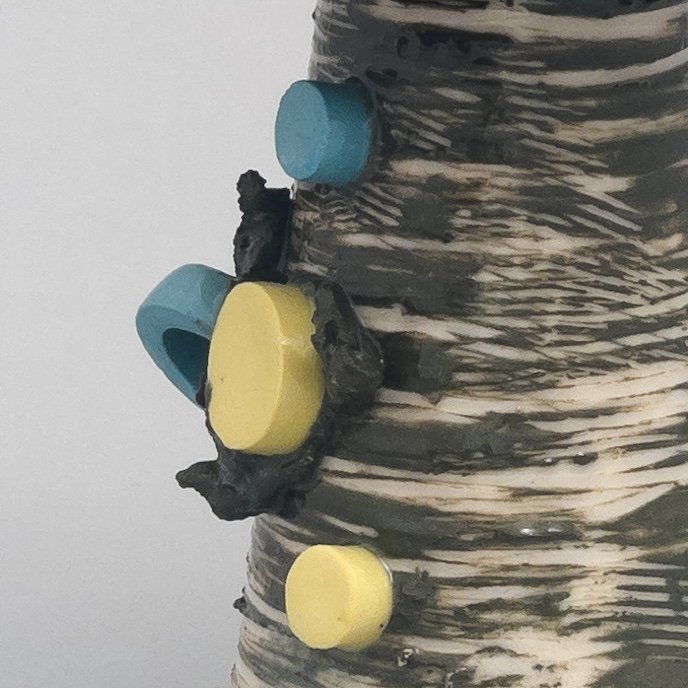
A dot is a simple thing to make and a hard thing to leave alone. I press one onto a piece and immediately want to know what it is doing there. Does it belong? Does it need a second? Where?
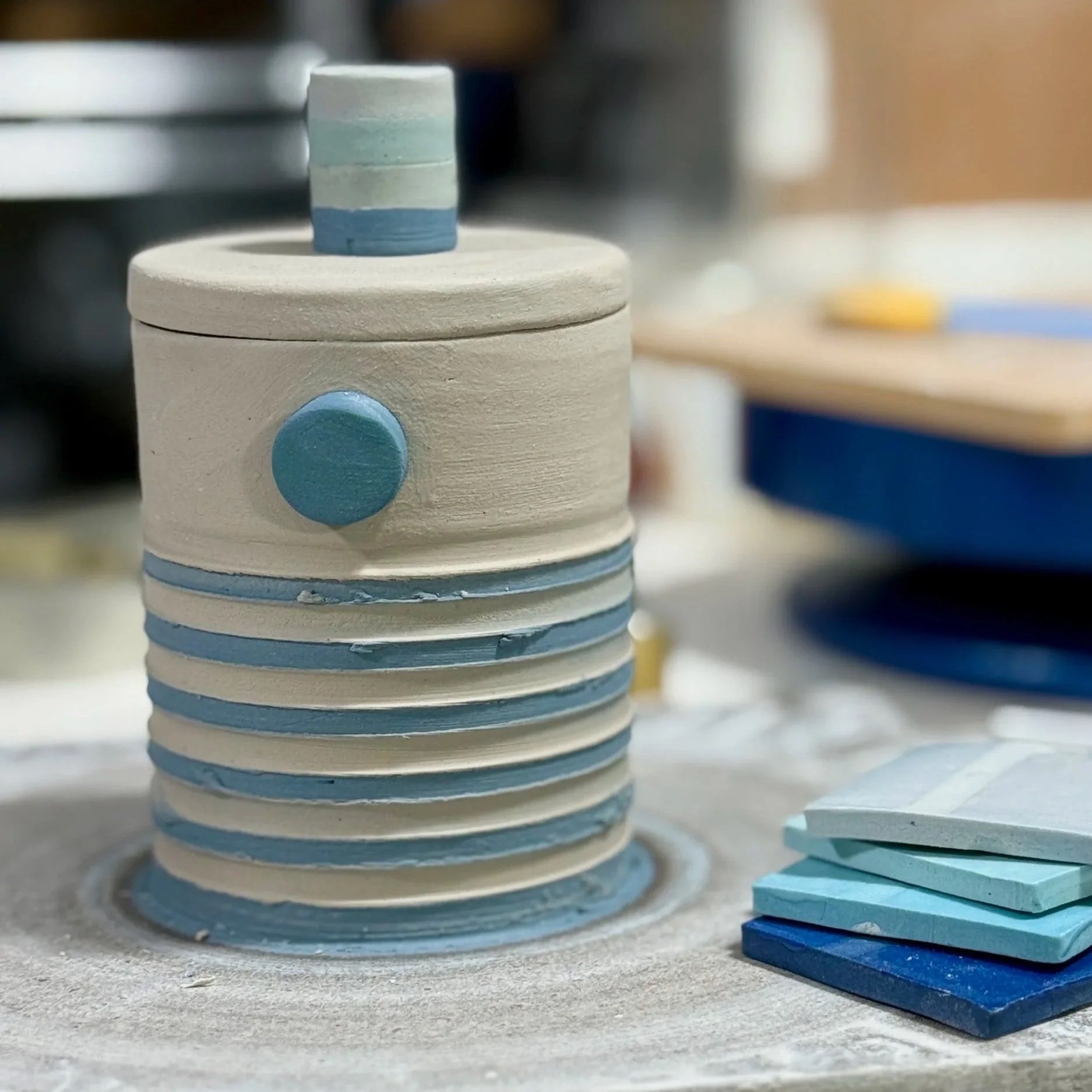
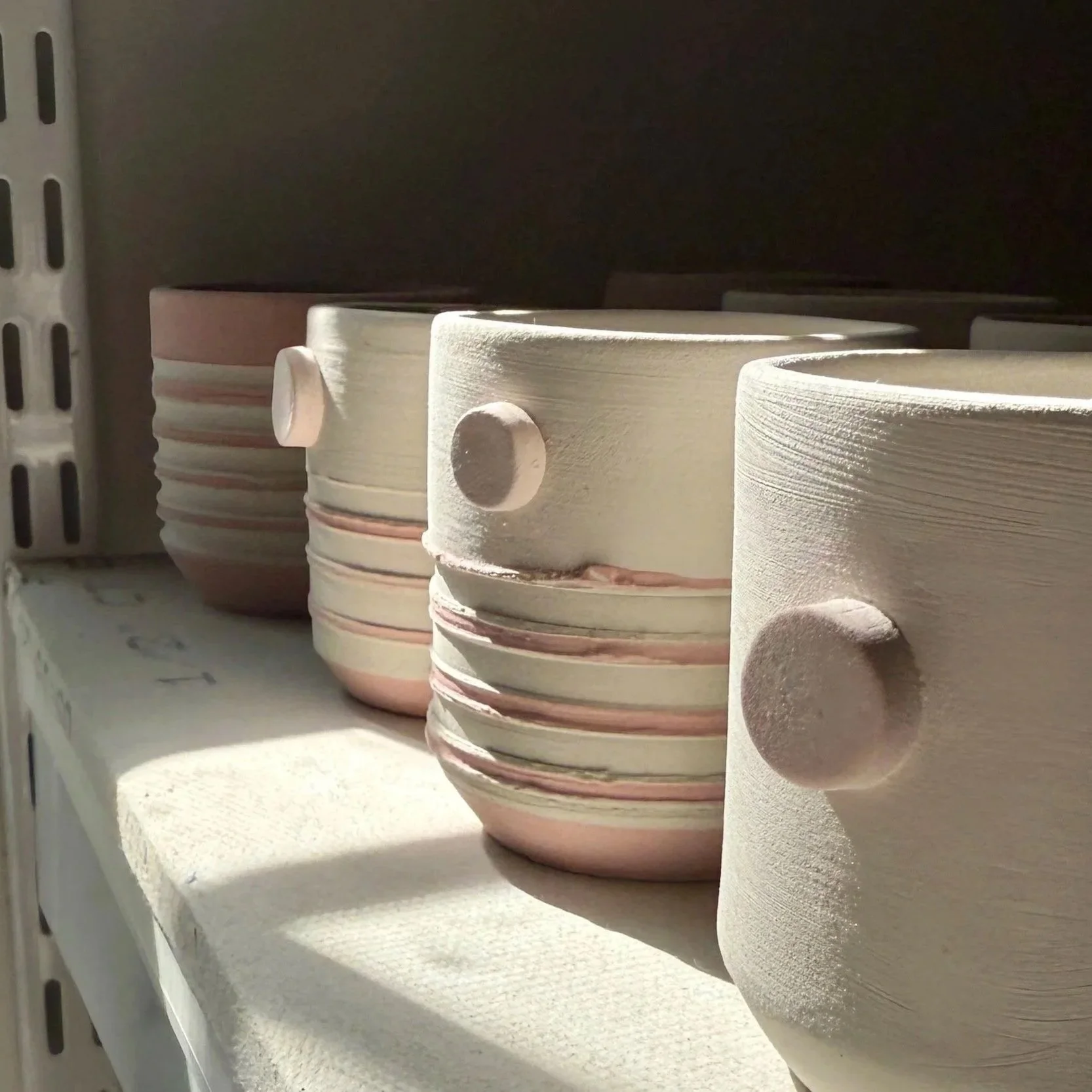
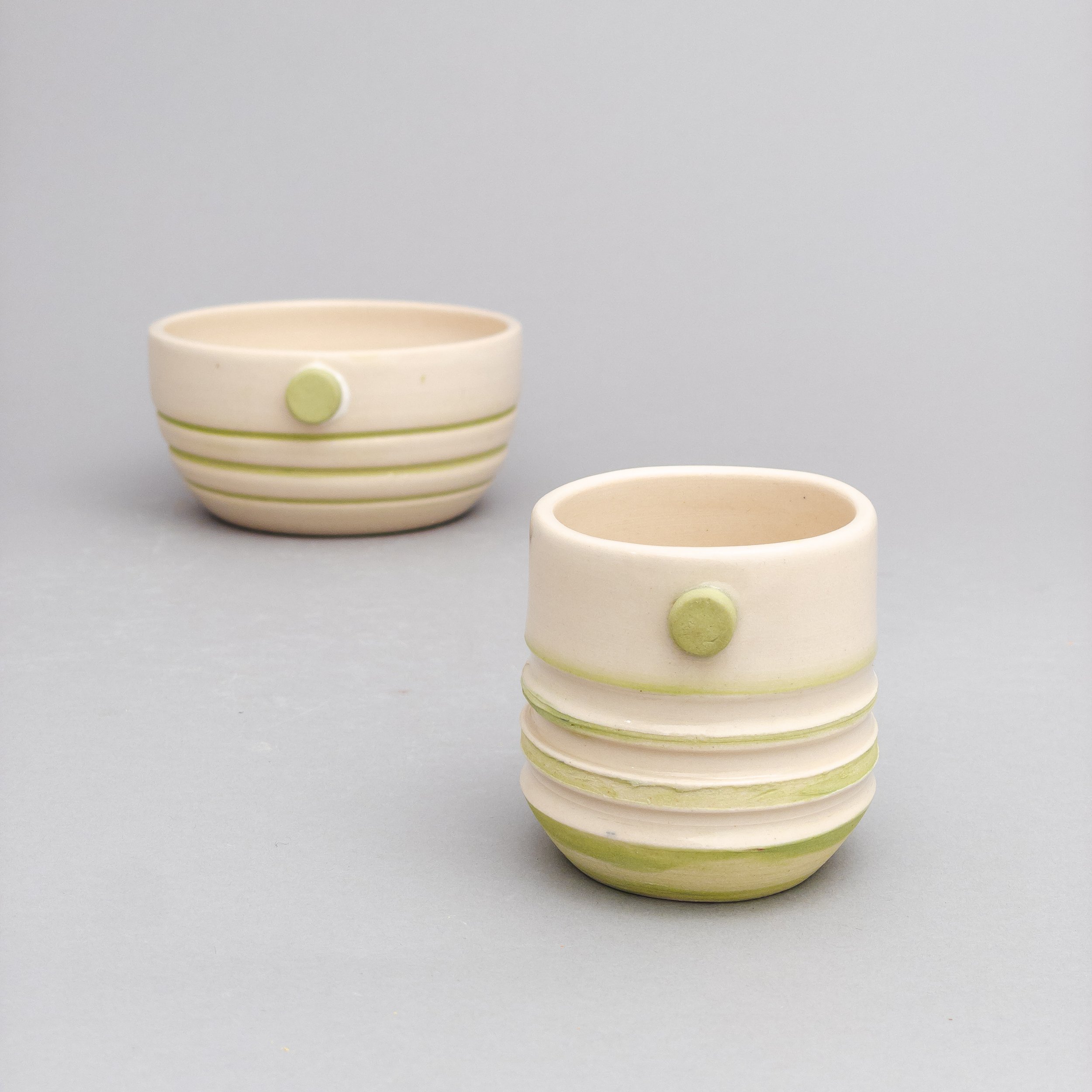
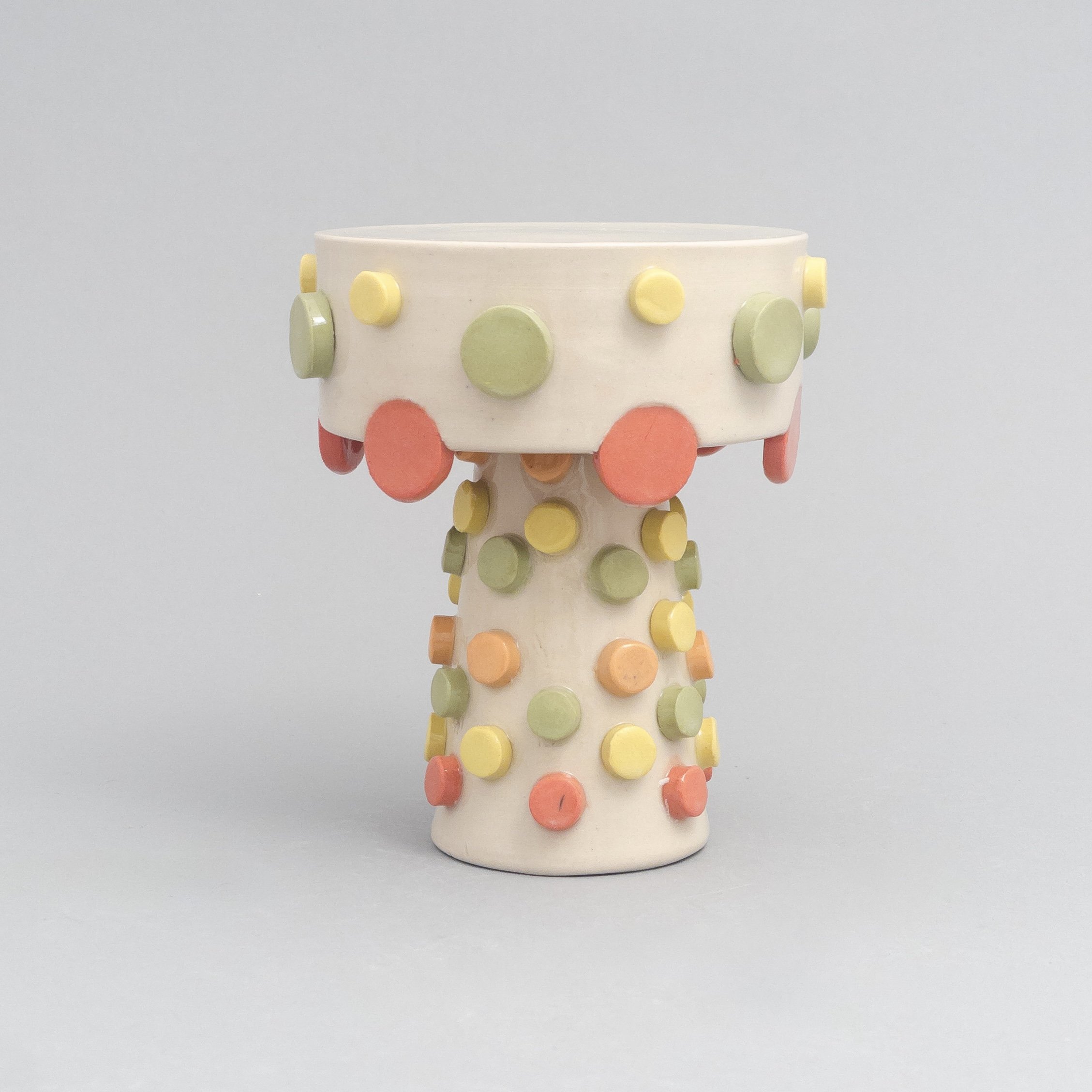
For a while I made pieces that were only dots, every decision resting on where they sat, how big they were, and what color they were. A dot too high looks nervous. A big dot and a small one on the same cup are not just different sizes; they are a loud note and a quiet one. A single dark dot on a pale cup is one thing; move it a centimeter, or make it moss green, or shrink it by half, and it is another. With nothing else on the surface, a dot is only its position, its size, and its color, and that turned out to be plenty to work with.
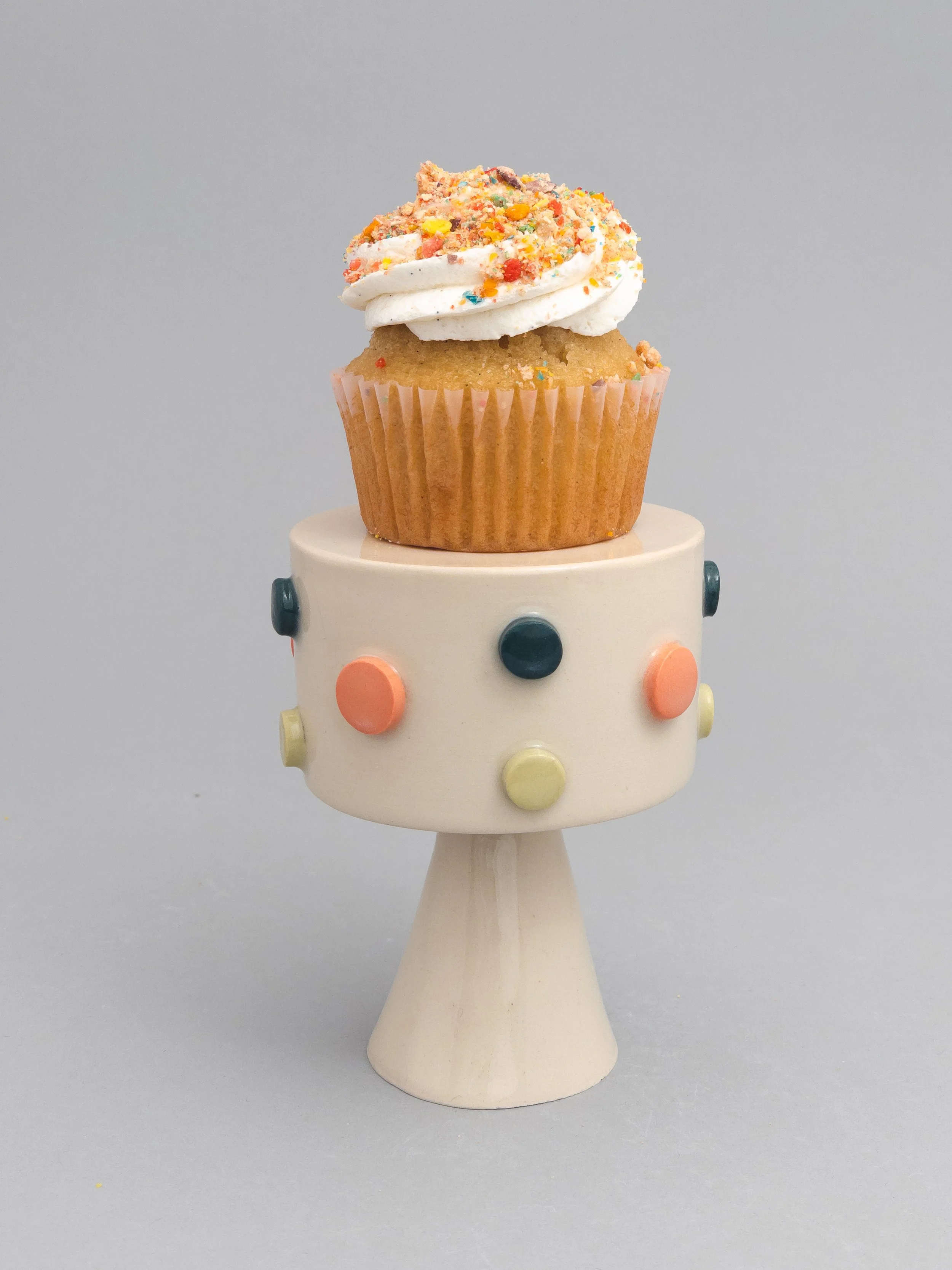
For a while I made pieces that were only dots, every decision resting on where they sat, how big they were, and what color they were.
A dot too high looks nervous. A big dot and a small one on the same cup are not just different sizes; they are a loud note and a quiet one. A single dark dot on a pale cup is one thing; make it moss green, or shrink it by half, and it is another. With nothing else on the surface, a dot is only its position, its size, and its color, and that turned out to be plenty to work with.
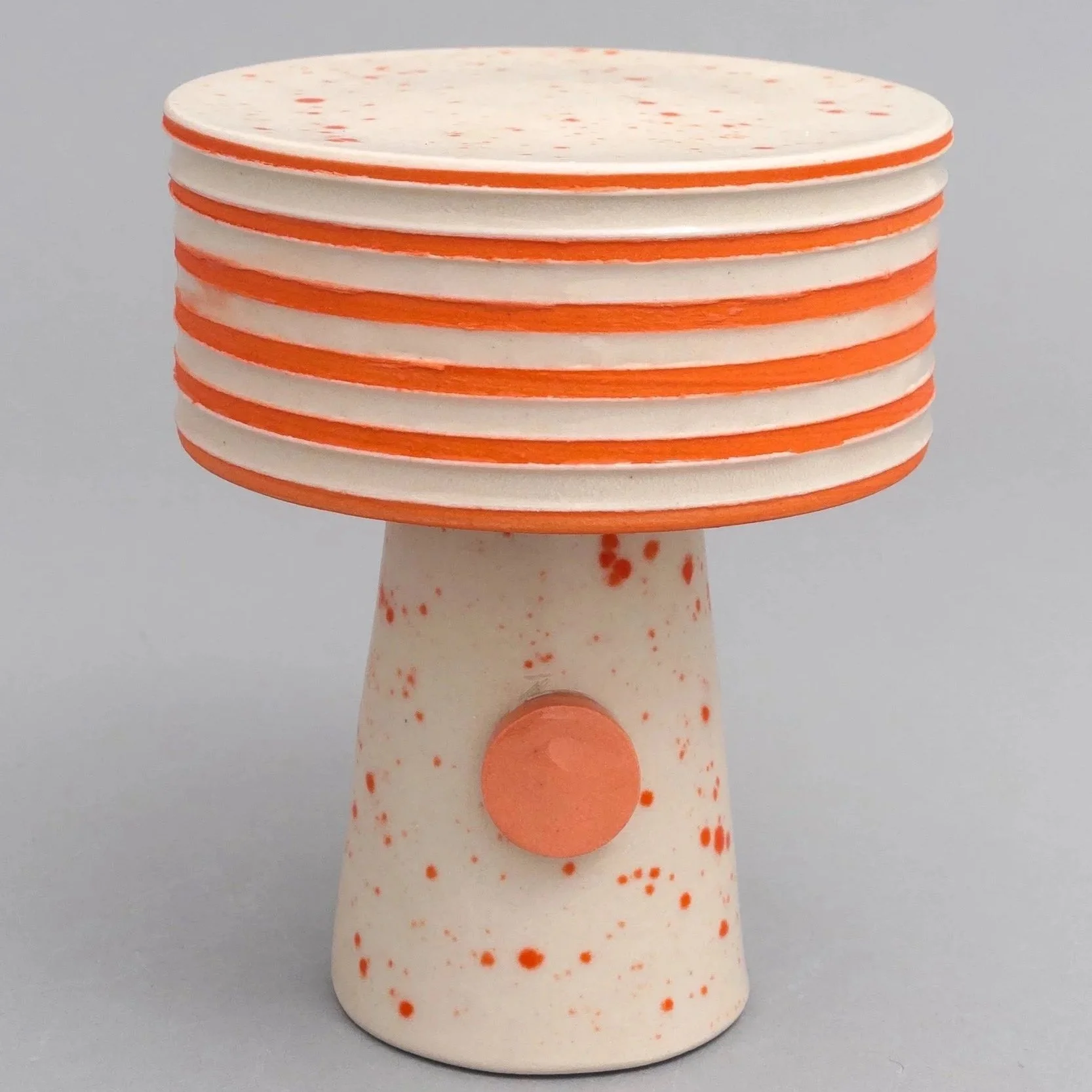
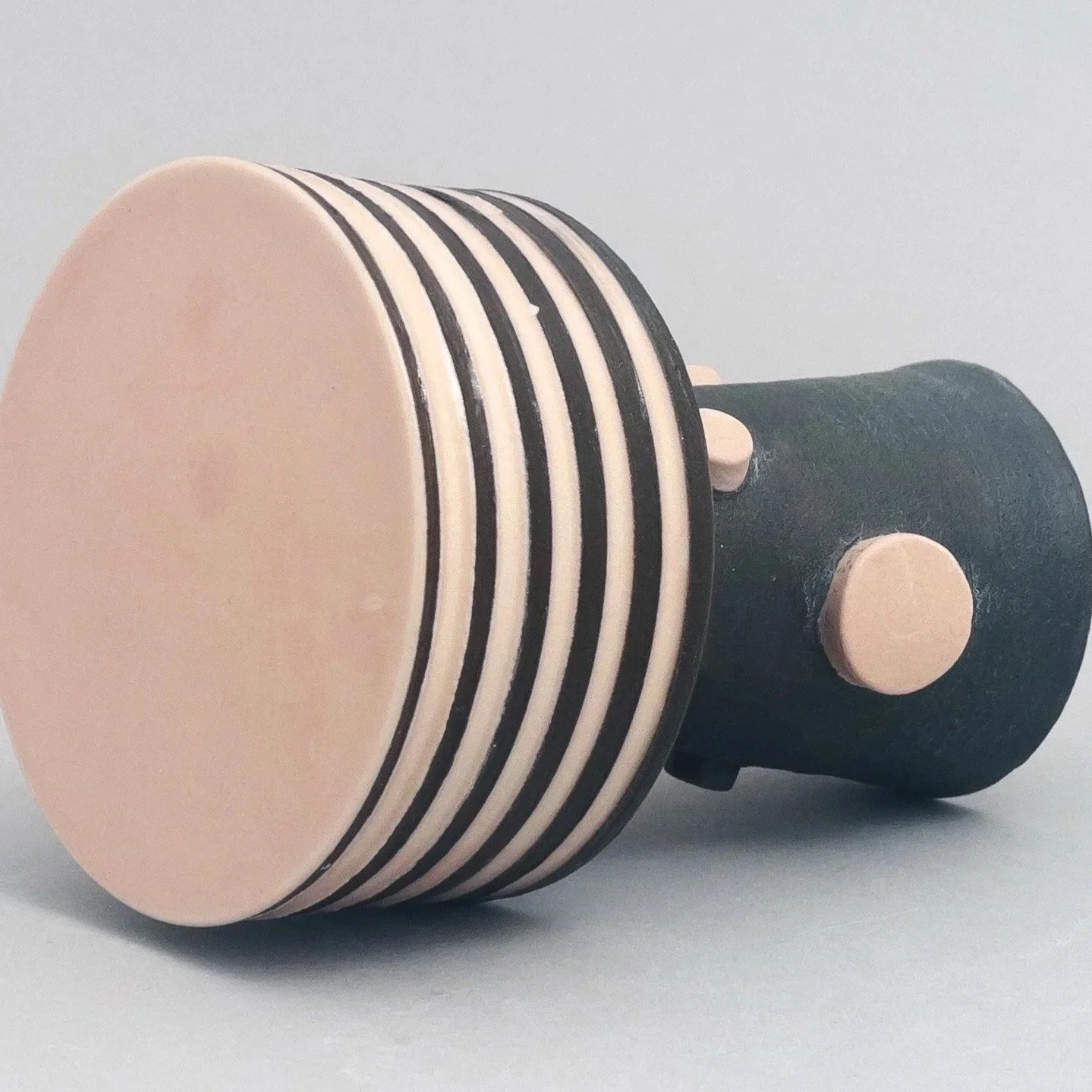
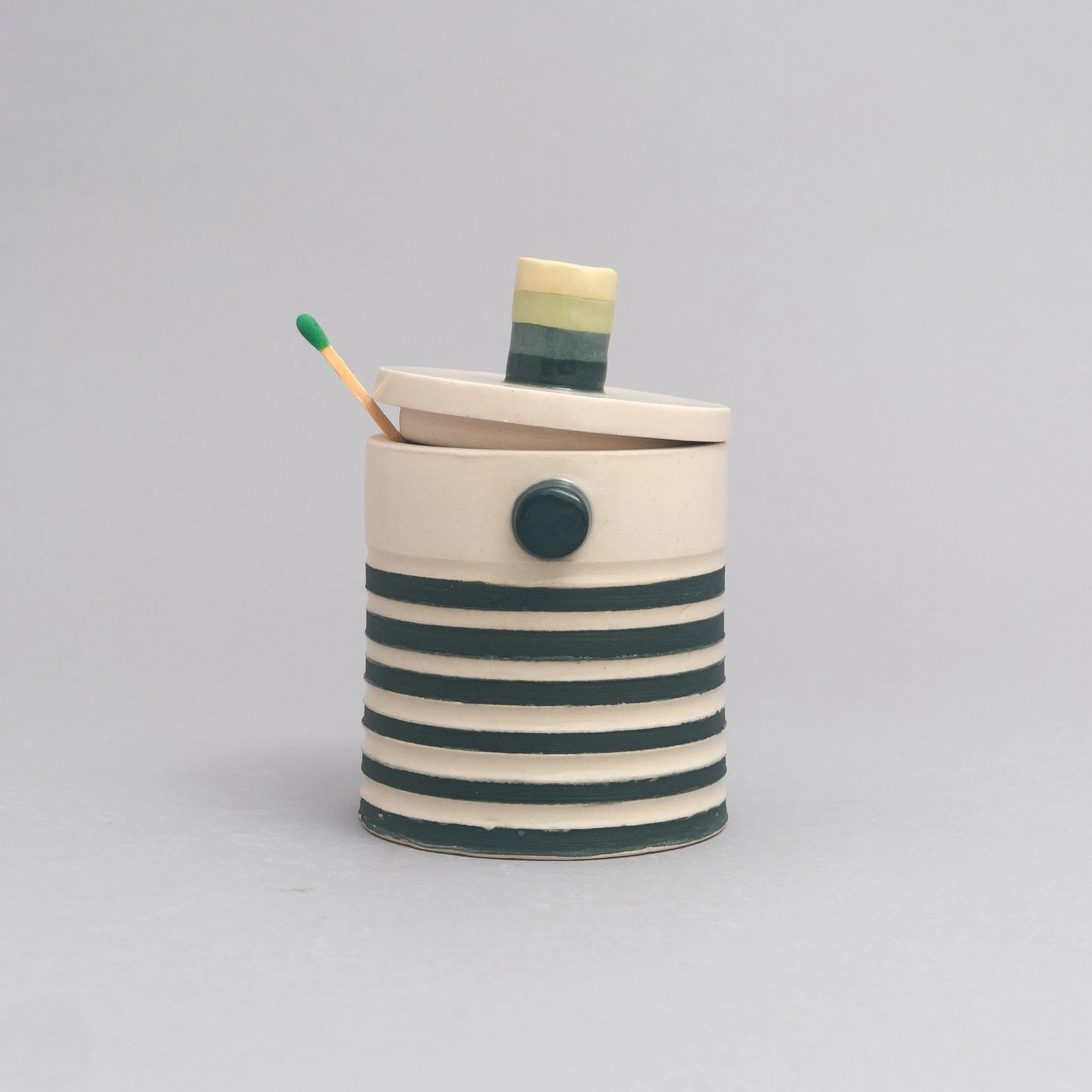
When the stripes turned up, the dot changed. By the time I place a dot now, there is usually a line already, keeping time. A dot does not move the way a stripe does. It sits. A stop placed well is not an interruption. It is the off-beat, the thing that turns a march into a swing.
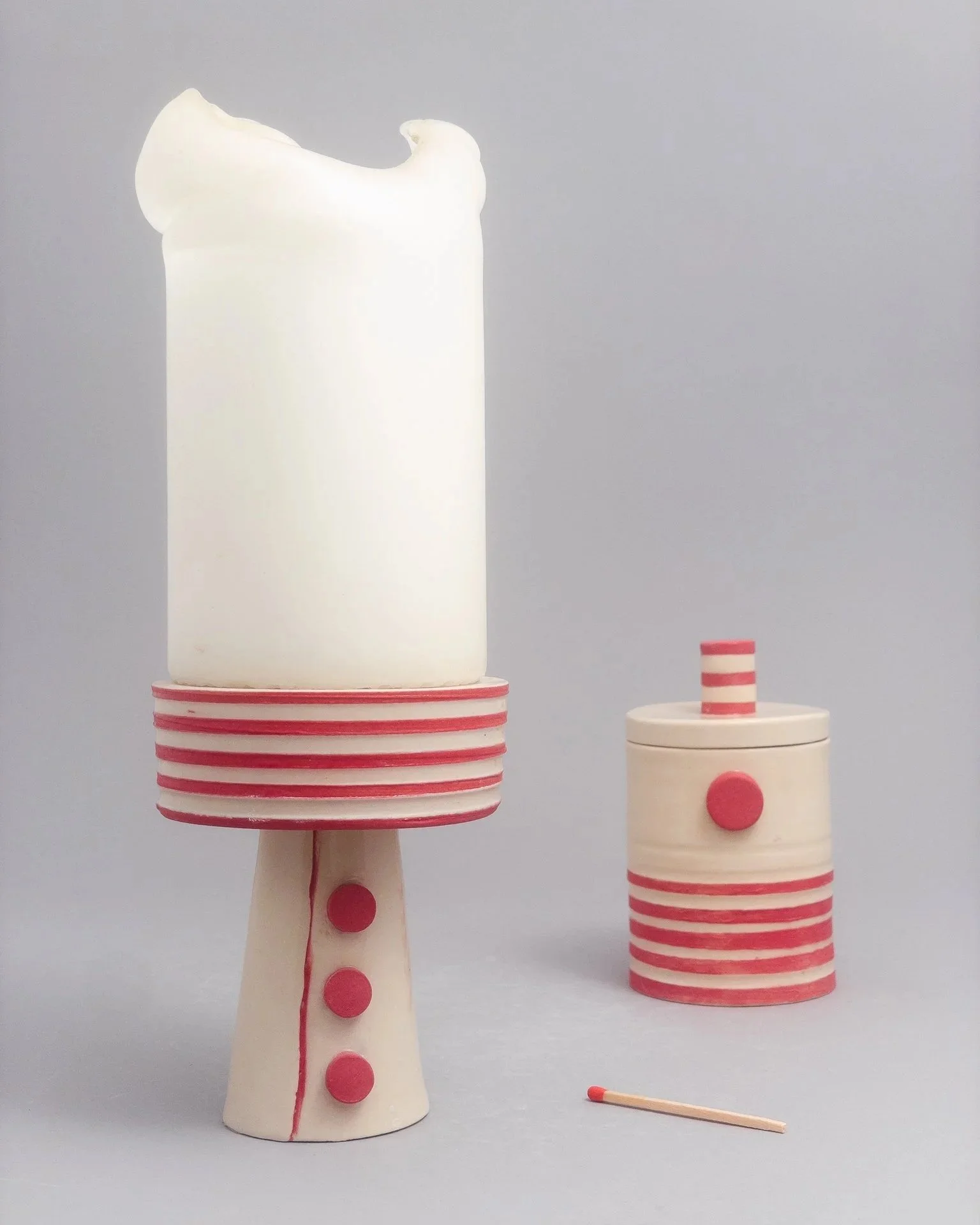
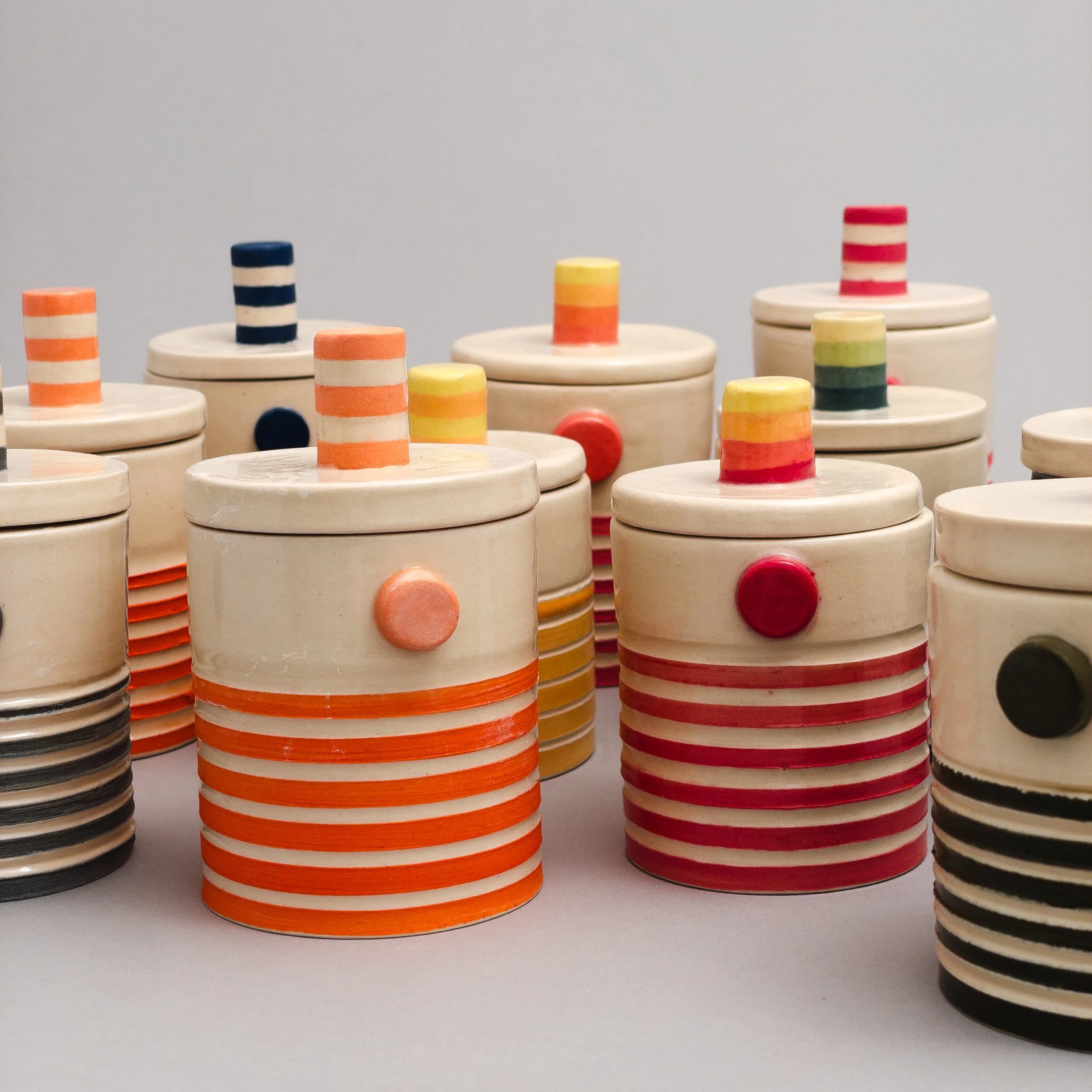
I almost never use one without the other anymore. A stripe alone is order. A dot alone is an event with nothing around it. Together they argue, but the argument is what I like: line against point, motion against rest, the running against the still. Two patterns set side by side, each making the other audible.
The designers around Sottsass, in 1980s Milan, built a whole language out of the collision: stripes beside dots beside zigzags, colors that should not work, pattern thrown together against pattern for the joy of it. Putting two patterns at odds and watching them hold is still the part of the work I like best. Two rhythms set against each other are more alive than either alone. The stripe keeps the time. The dot is where I break it.
Radice, Barbara. Memphis: Research, Experiences, Results, Failures and Successes of New Design. Rizzoli, 1984.