

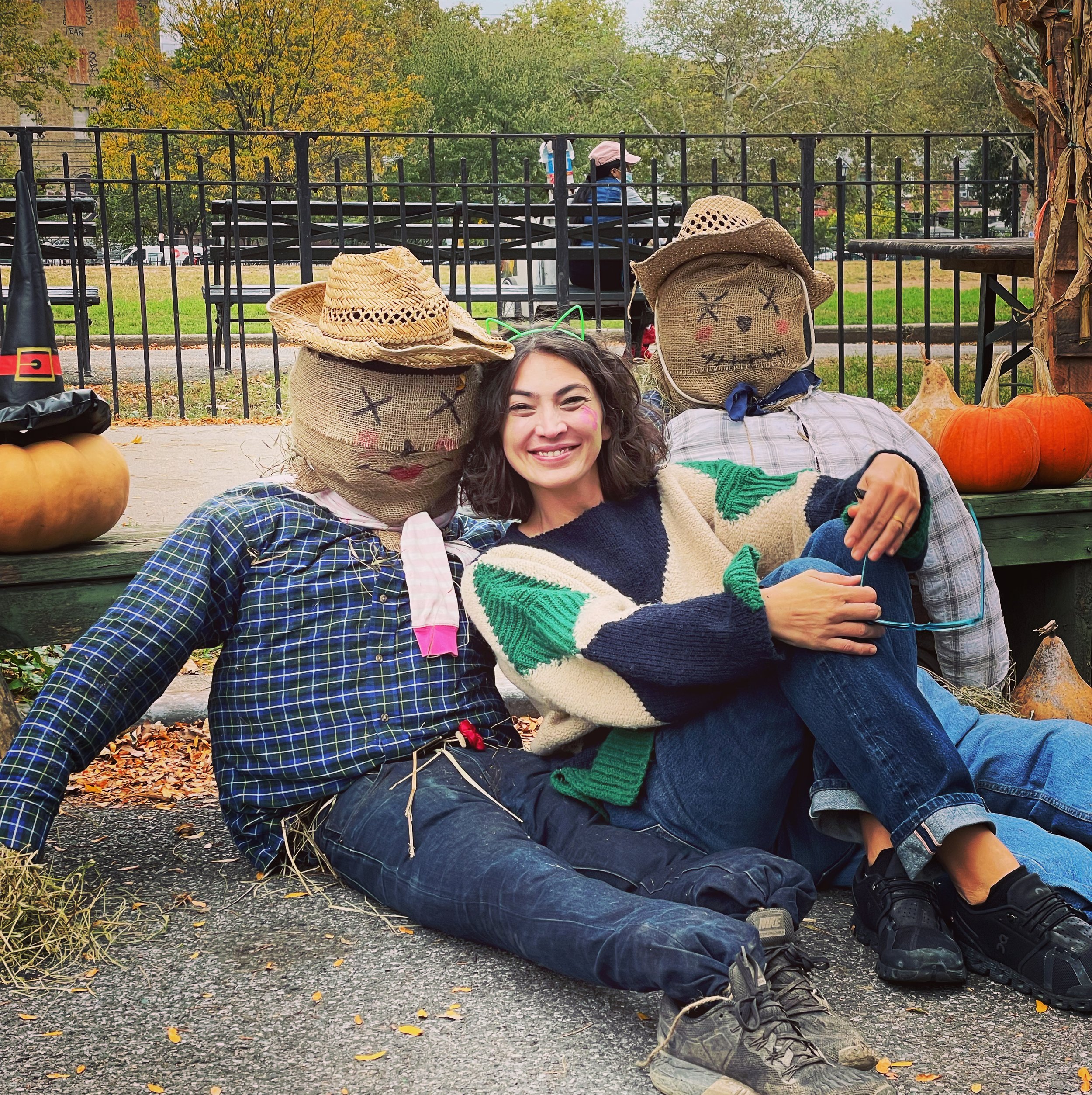
I’m Marianna Di Giansante, an Italian ceramicist in Brooklyn, NY and Elba, Tuscany.
I came to clay late. First I worked in hospitality, then trained as a chef, then cooked in a Michelin-starred kitchen, where everything runs on speed and perfection. A dish is made flawlessly and then eaten, gone in minutes. I loved the work, but I wanted to make something that stayed. I started making porcelain to plate my own recipes. I began with pottery, and one thing led to another.
From Bologna to Brooklyn

The work
What I make now is the opposite of a plate in that kitchen. Ceramic stays, and gathers a life as it is used. It collects crumbs, wax, fingerprints, the small marks of being handled day after day. To me that is not wear. That is what I want.
What I hope for is simple. First a smile, the kind you don't decide to give. Then you notice a mark my hands left. The object takes your marks too. In time, they sit beside mine.
Where it comes from
The look of the work comes from things I've loved and encountered over a lifetime. From the Italian visual world I grew up in: the Memphis Group and Ettore Sottsass, the colors of the circus, the striped umbrellas of the beach. From opera and commedia dell'arte, which taught me that feeling can be staged, dressed, made large without apology. And from the table of Bologna, where the right plate mattered even when nobody was coming.
None of this is accidental. It is the world I come from, and it is what I still believe: that the everyday deserves a little theater.
I work mostly in French Limoges porcelain, which I carry back from Italy in my luggage, a few kilos at a time. In Brooklyn I use it for the rings, while I use American porcelain clay for the homeware. In Italy, where the Limoges is easier to come by, I hope to work only with Limoges.
The material
Why argilla?
Argilla means clay in Italian.
I chose it because that’s where it all begins.
From the Latin argīlla and Greek árghilos, the word connects us to early histories—when gods shaped people from earth, and people shaped vessels to hold their needs.
It felt honest, grounded, and open to tradition and reinvention. There’s more on the name in the journal.
More
You can explore a selection of my work here, or read recent studio thoughts in the journal.
To receive occasional updates or studio notes, join the newsletter.