Confetti on clay
On a word that means two things, a glaze that settles where it lands, and why scattered is not the same as random.
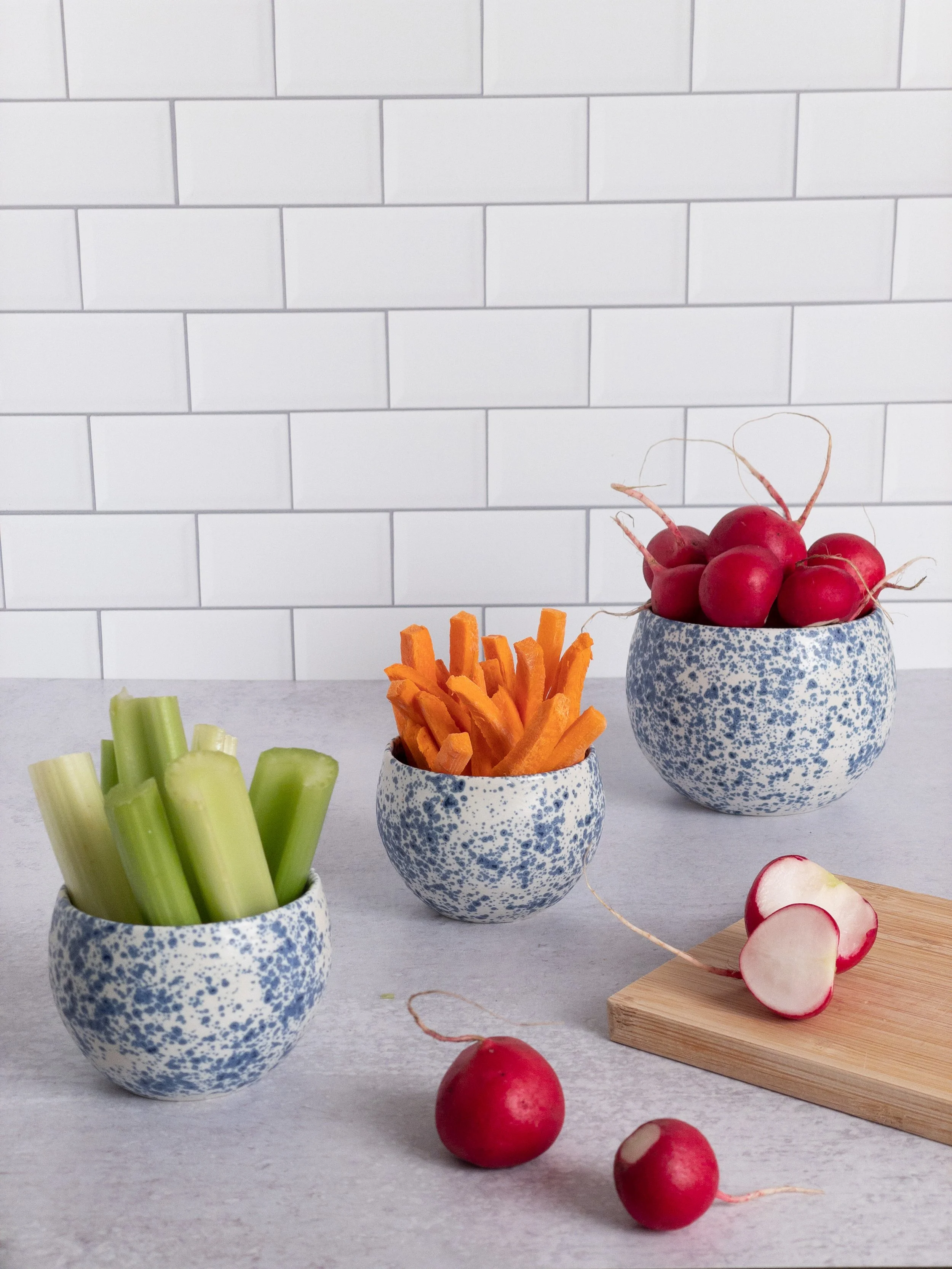
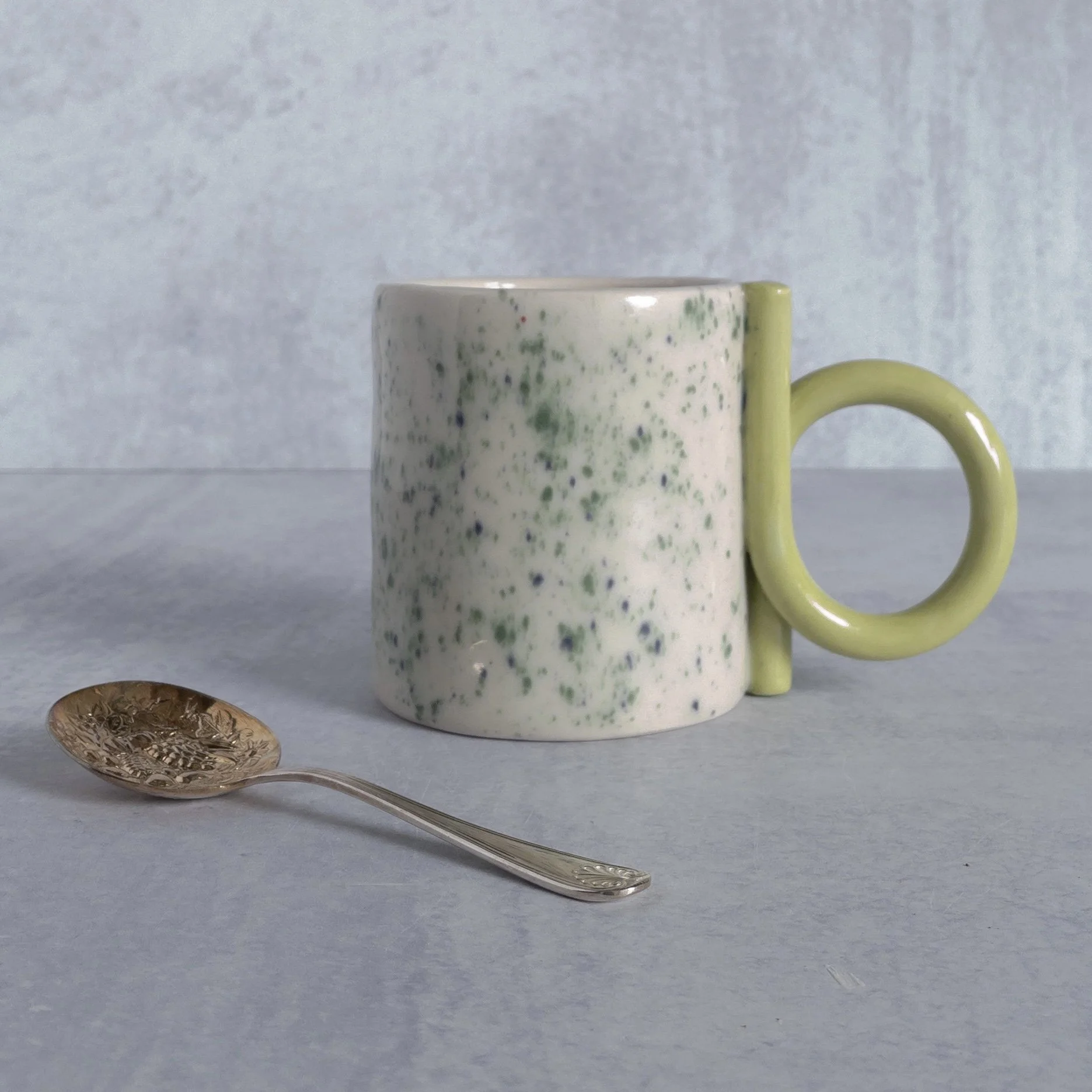
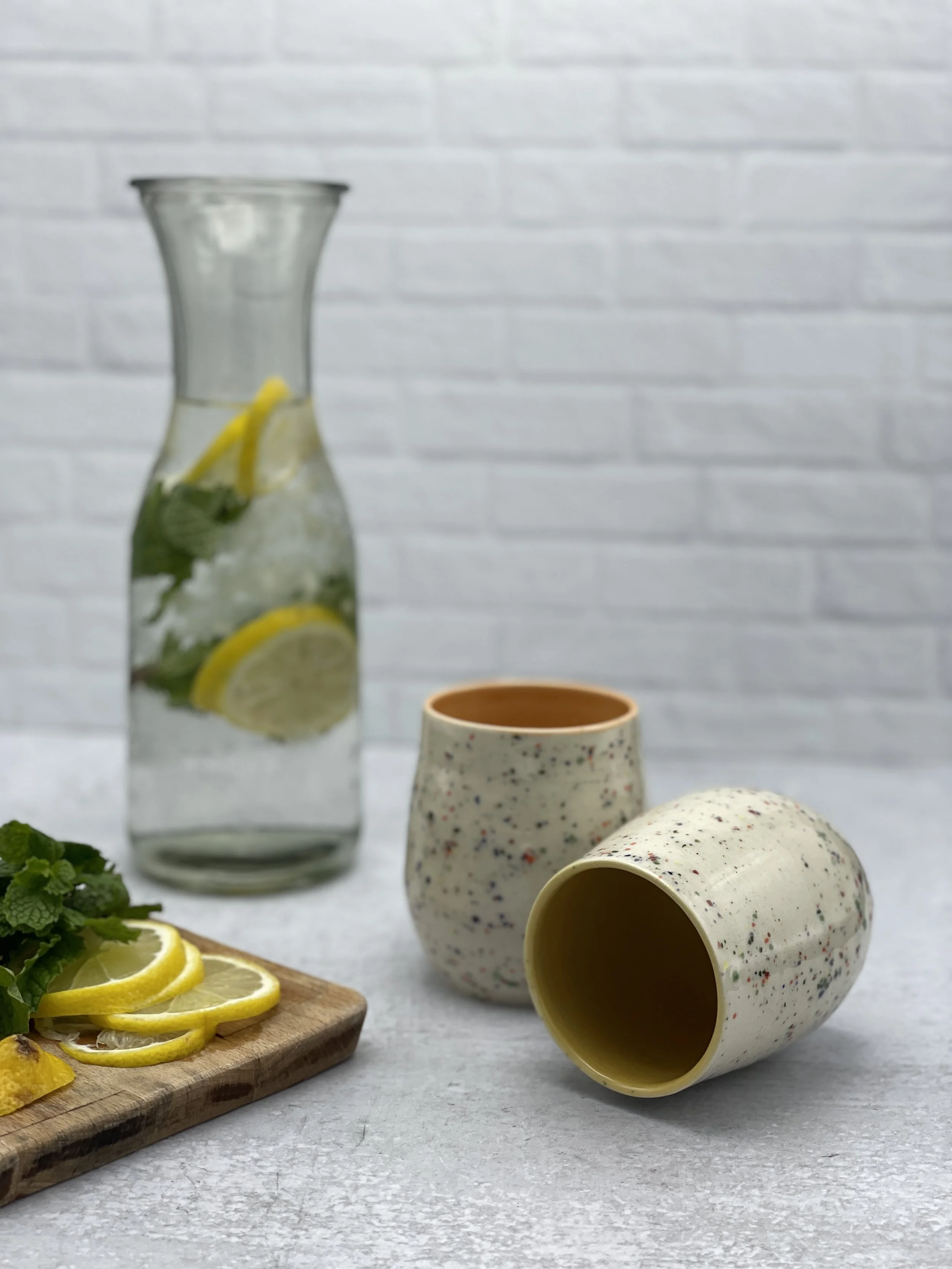
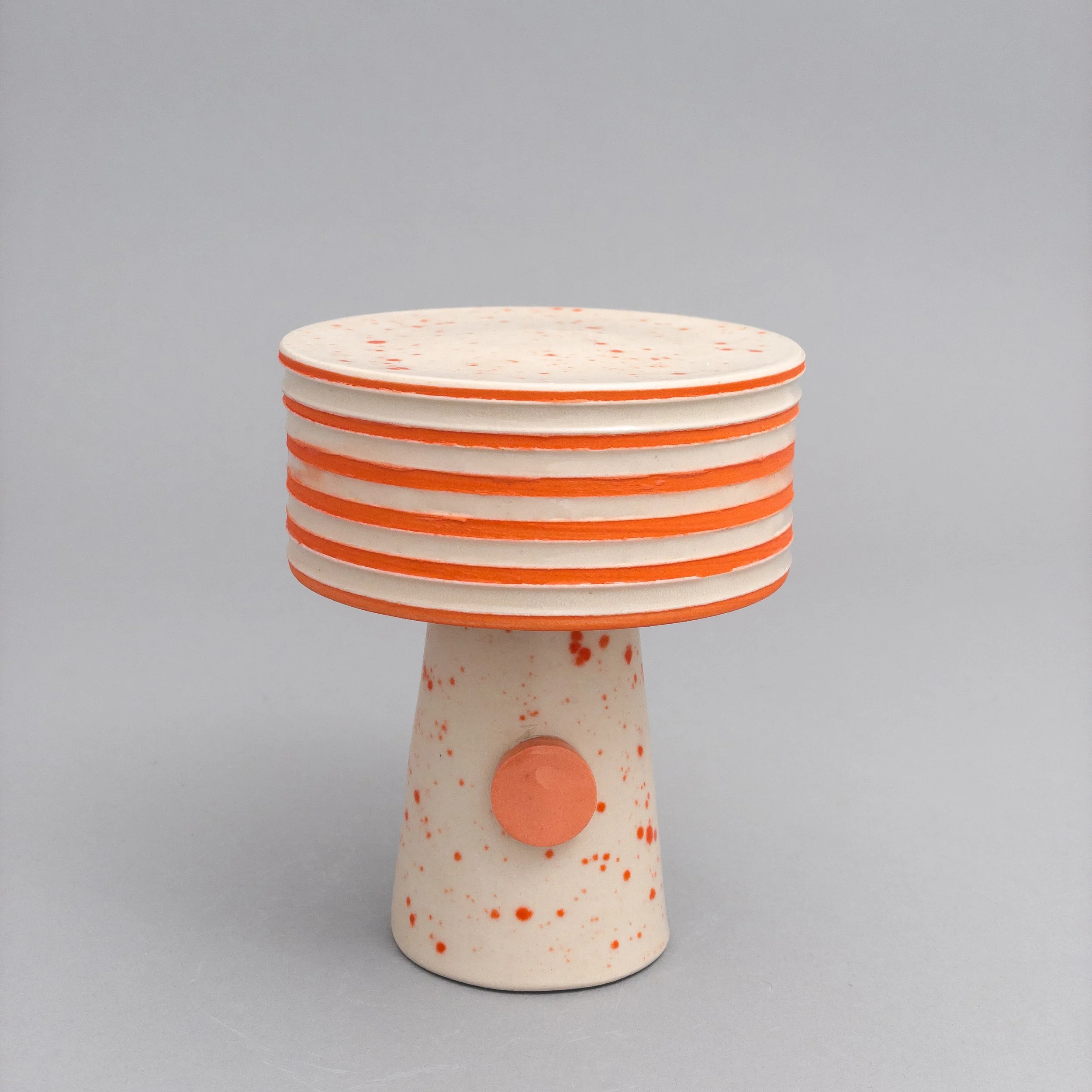
In Italian, confetti are sugar-coated almonds. White for weddings, pink or blue for a birth, wrapped in a small net and tied with a bow. The most famous come from Sulmona, in Abruzzo, not far from where one of my grandfathers was born. You keep them in a bowl, you give them at the door. The paper bits thrown at celebrations are technically coriandoli. But when I reached for a name for this glaze, confetti felt right anyway, because the word carries what the surface carries: something festive, something scattered, and then still.
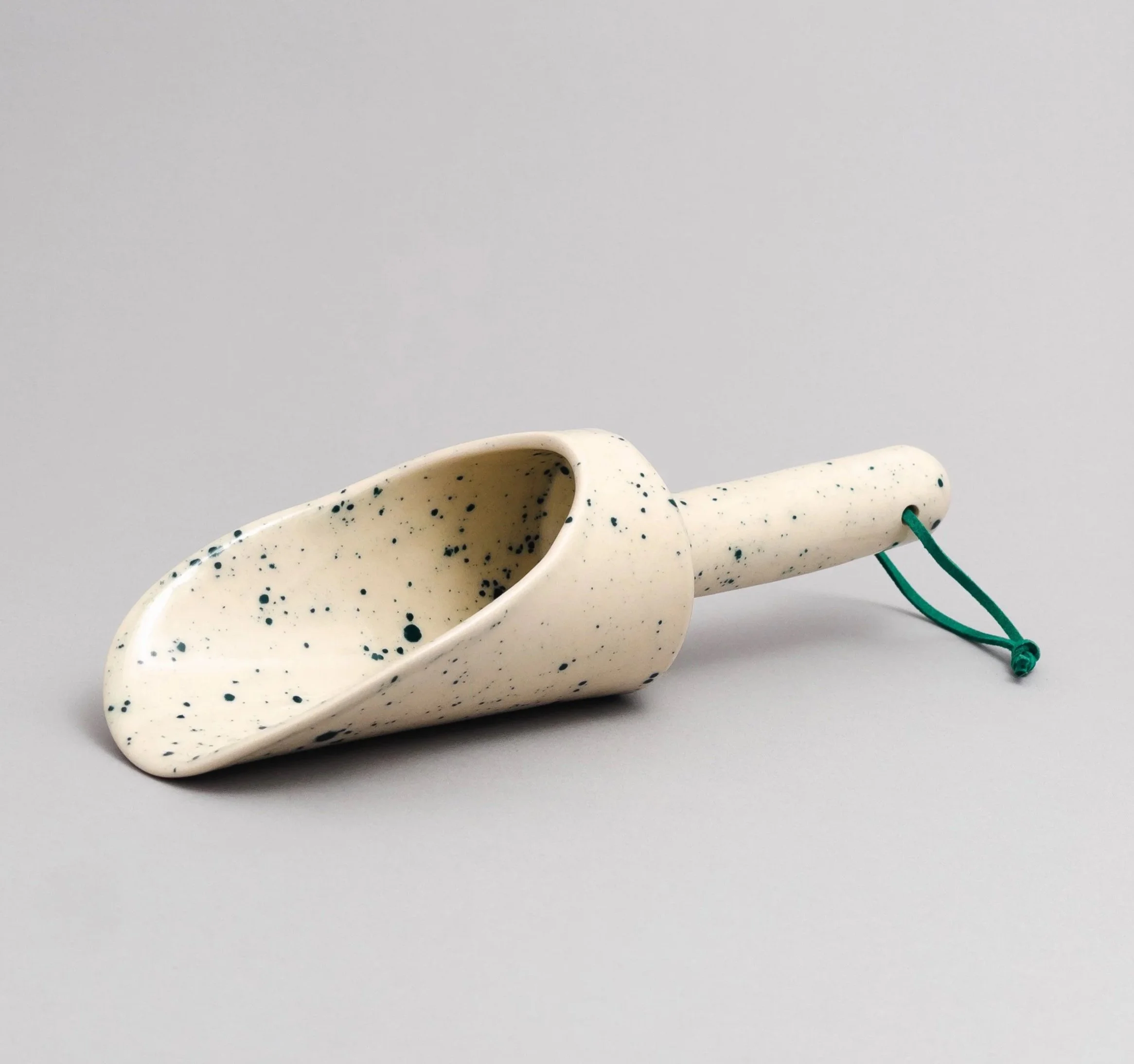
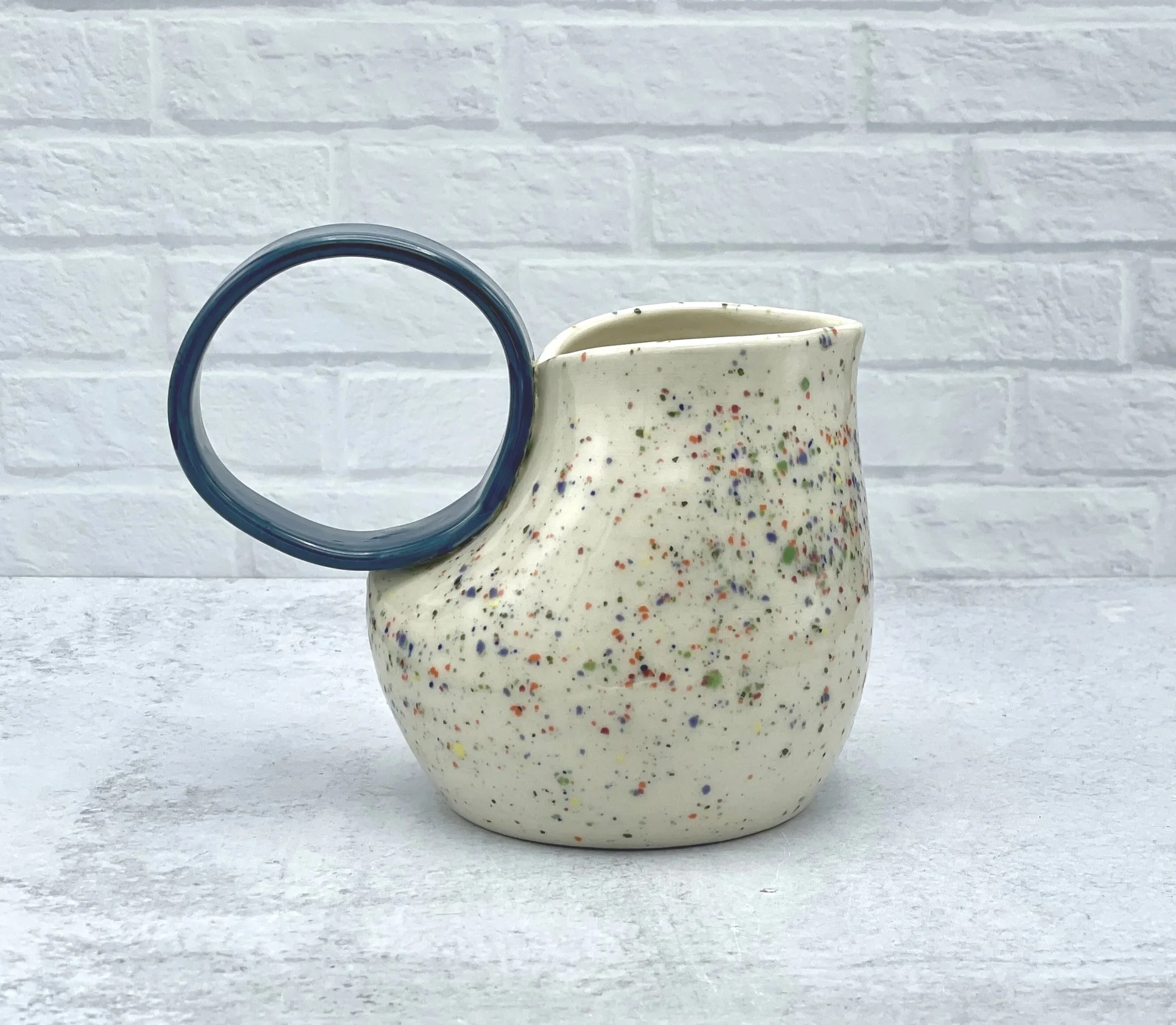
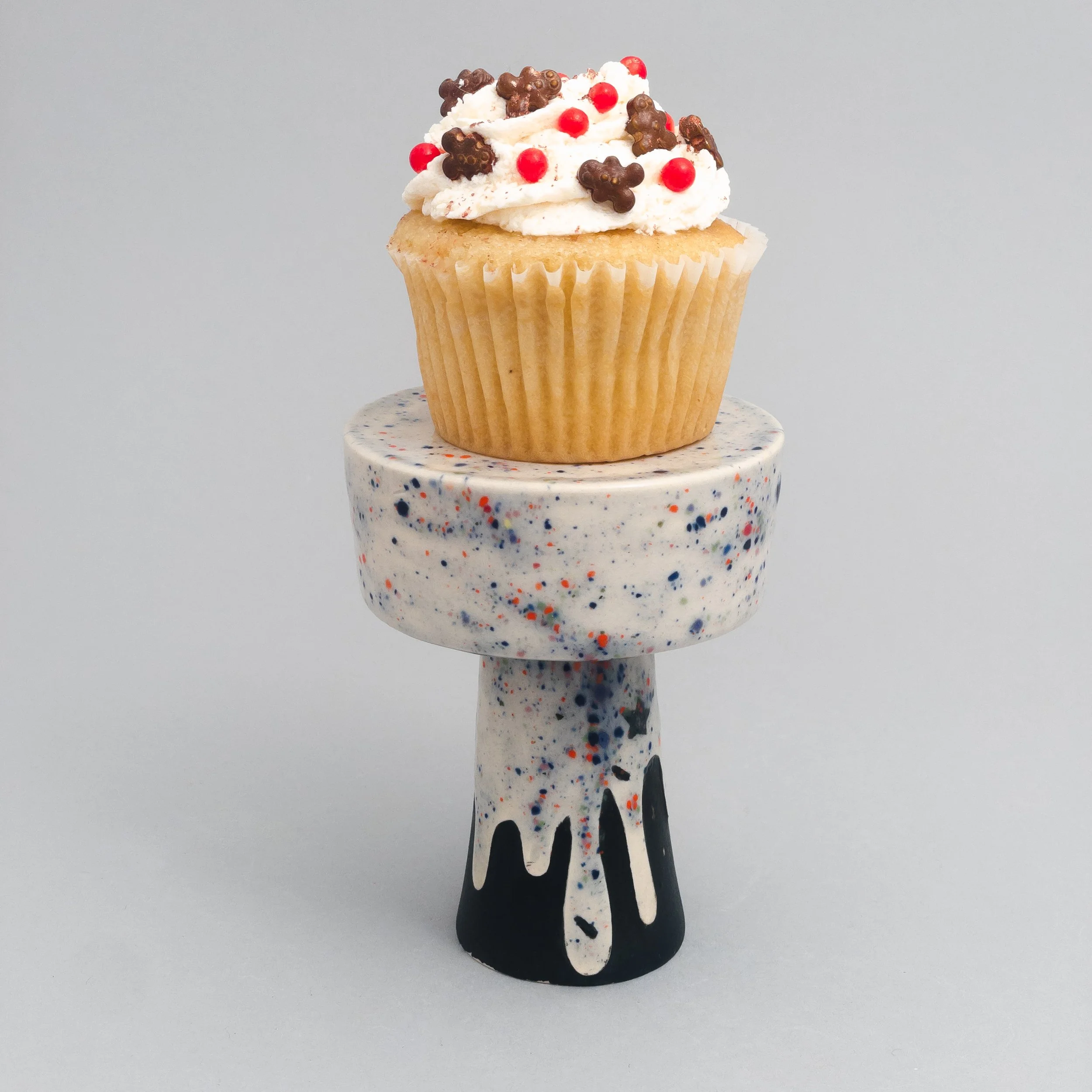
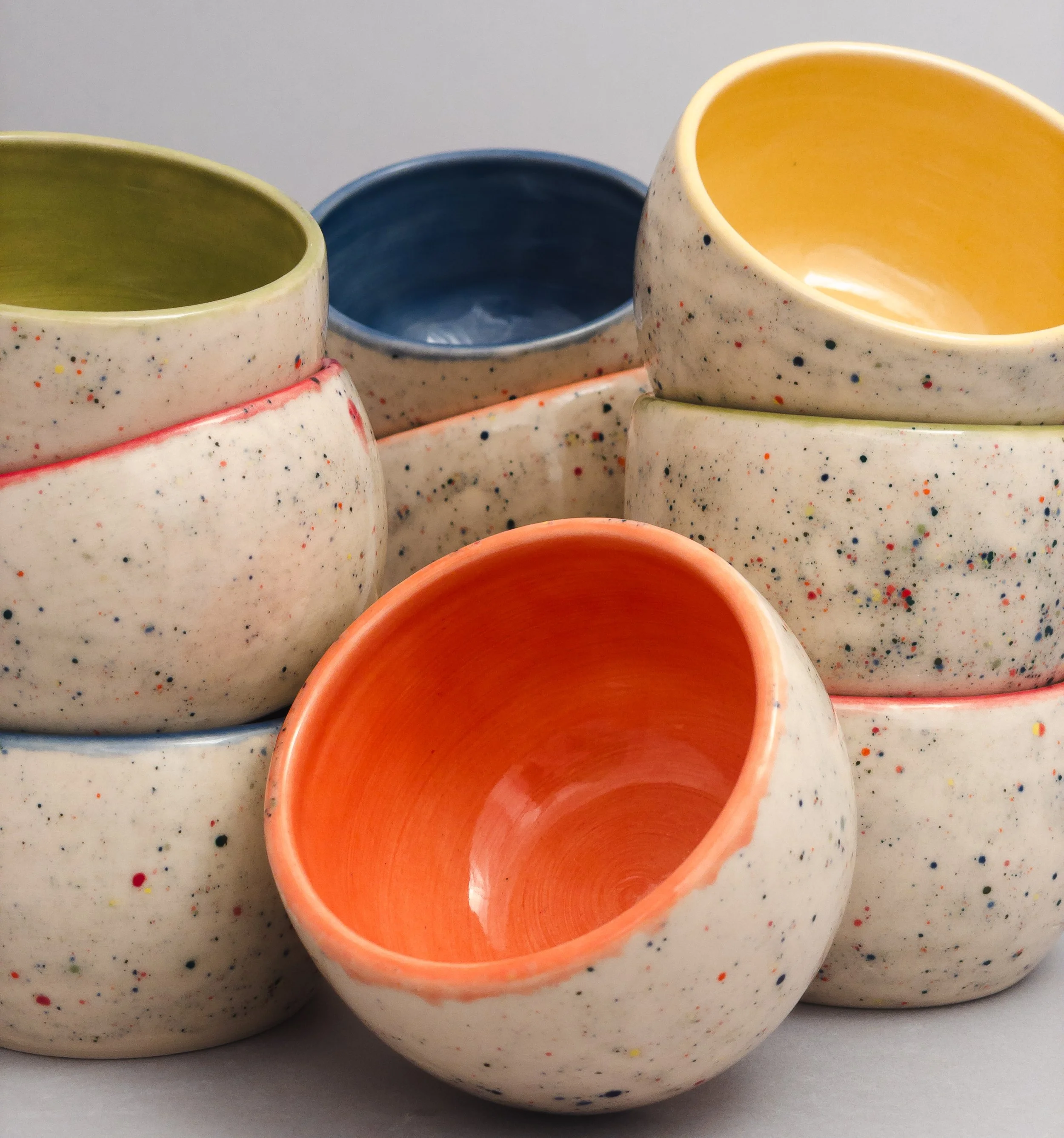
The glaze is not a single color. Tiny chips of colored glaze, fired until they no longer dissolve in water, blended into a clear base. During the final firing they stay intact, settling across the porcelain as the piece cools. You can lay different colors in different areas, control the palette, shift the general distribution. But the individual speck lands where it lands.
There is a difference between scattered and random. Scattered implies a hand, a source, a direction from which things dispersed. Random implies no hand at all. This glaze is scattered.
The effect changes with the form. On curves it concentrates; on flat planes it spreads. Some combinations are quieter: soft pink, azure, pale green. Others more awake. I used it first on the utility pieces, pitchers and cupcake stands and espresso cups, because it suited something about their function. They were already meant to be at the center of things, passed around, noticed without being made a fuss of.
Companion entry: “Why Dots?” — on Memphis, Sottsass, and the dot as the off-beat that makes the stripe swing.