

What is Mazarine Blue?
A color found in the kiln, traced back to a cardinal from Abruzzo.
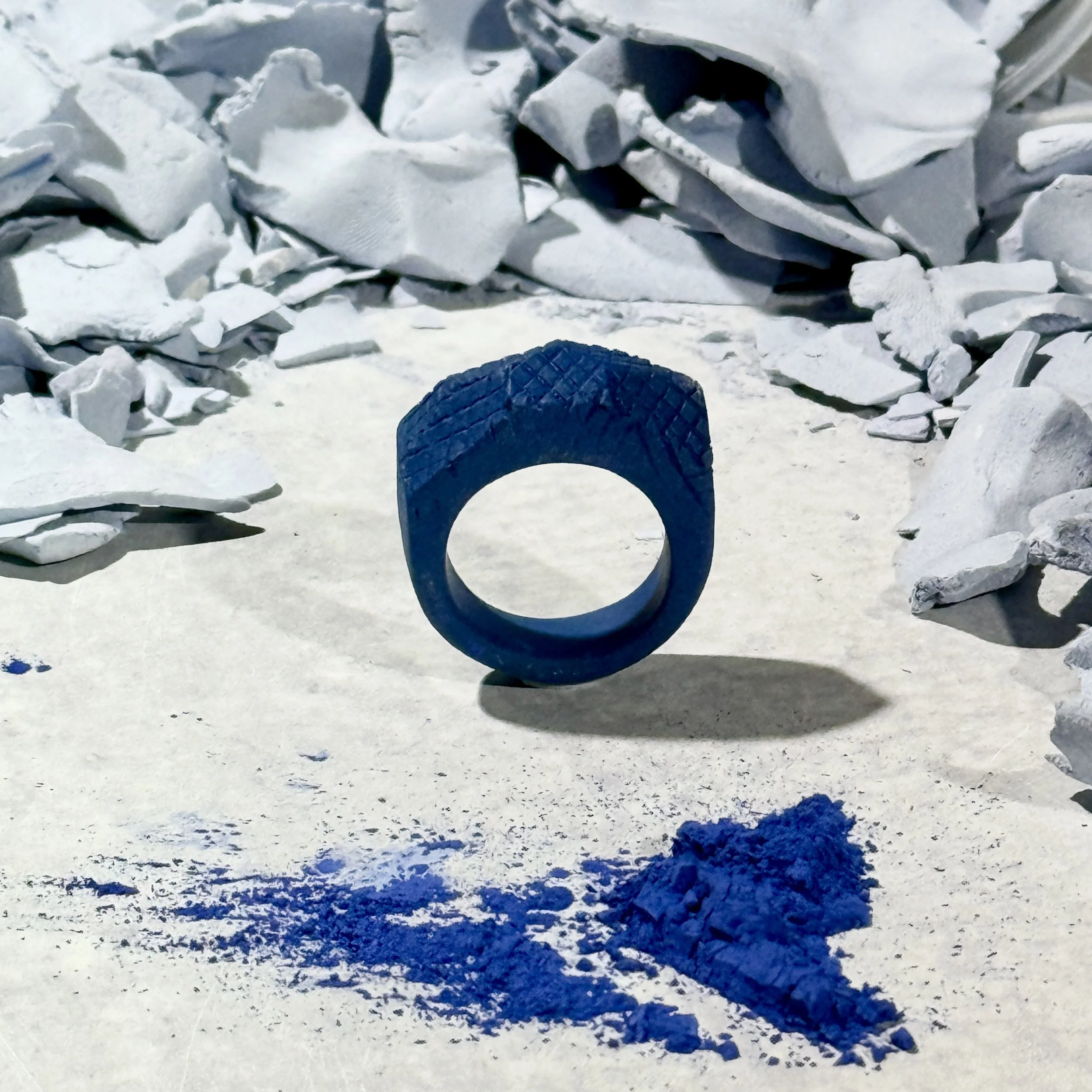
I ordered a blue Mason stain online, mixed it into the Limoges porcelain I use for my rings, and fired it. When I opened the kiln, the color was deeper and more vibrant than anything I had gotten from the cobalt alumina I had been using before. Richer. More present. I knew immediately it was going to stay.
I ordered a blue Mason stain online, mixed it into the Limoges porcelain I use for my rings, and fired it. When I opened the kiln, the color was deeper and more vibrant than anything I had gotten from the cobalt alumina I had been using before. Richer. More present. I knew immediately it was going to stay.
Then I got curious about the name. Mazarine. It's not a word you encounter every day, so I looked it up — the way you Google something after it's already won you over.
The word comes from Cardinal Mazarin, the Italian-born chief minister to Louis XIV. But here is the part that stopped me: he wasn't French at all. He was born Giulio Raimondo Mazzarino in 1602, in Pescina — a small town in Abruzzo, in central Italy. My grandfather is from L'Aquila, twenty kilometers away. A color I discovered in my Brooklyn studio, carrying a name from the same mountains.
Mazzarino entered French service, became Jules Mazarin, and rose to become the
most powerful man in Europe after the king. His influence extended into fashion,
taste, and material culture. The deep, velvety blue associated with his court —
somewhere between cobalt and ultramarine, with a violet undertone — became one of the most fashionable shades of the seventeenth century. Gowns, velvets, and porcelain
described as mazarine blue were markers of power and refinement.
There is something fitting in that. Michel Pastoureau, in Blue: The History of a Color, traces how blue itself made a similar journey — from the margins of European culture to its absolute center. In medieval Europe, blue was considered a minor color, associated with the Celtic and Germanic peoples Rome had conquered, barbaric and peripheral. It entered prestige culture gradually, largely through the Virgin Mary's robes in religious painting, which made it sacred, then royal, then aristocratic. The color and the man share an arc: both arrived from outside, both became indispensable. By Mazarin's time, that arc was complete.
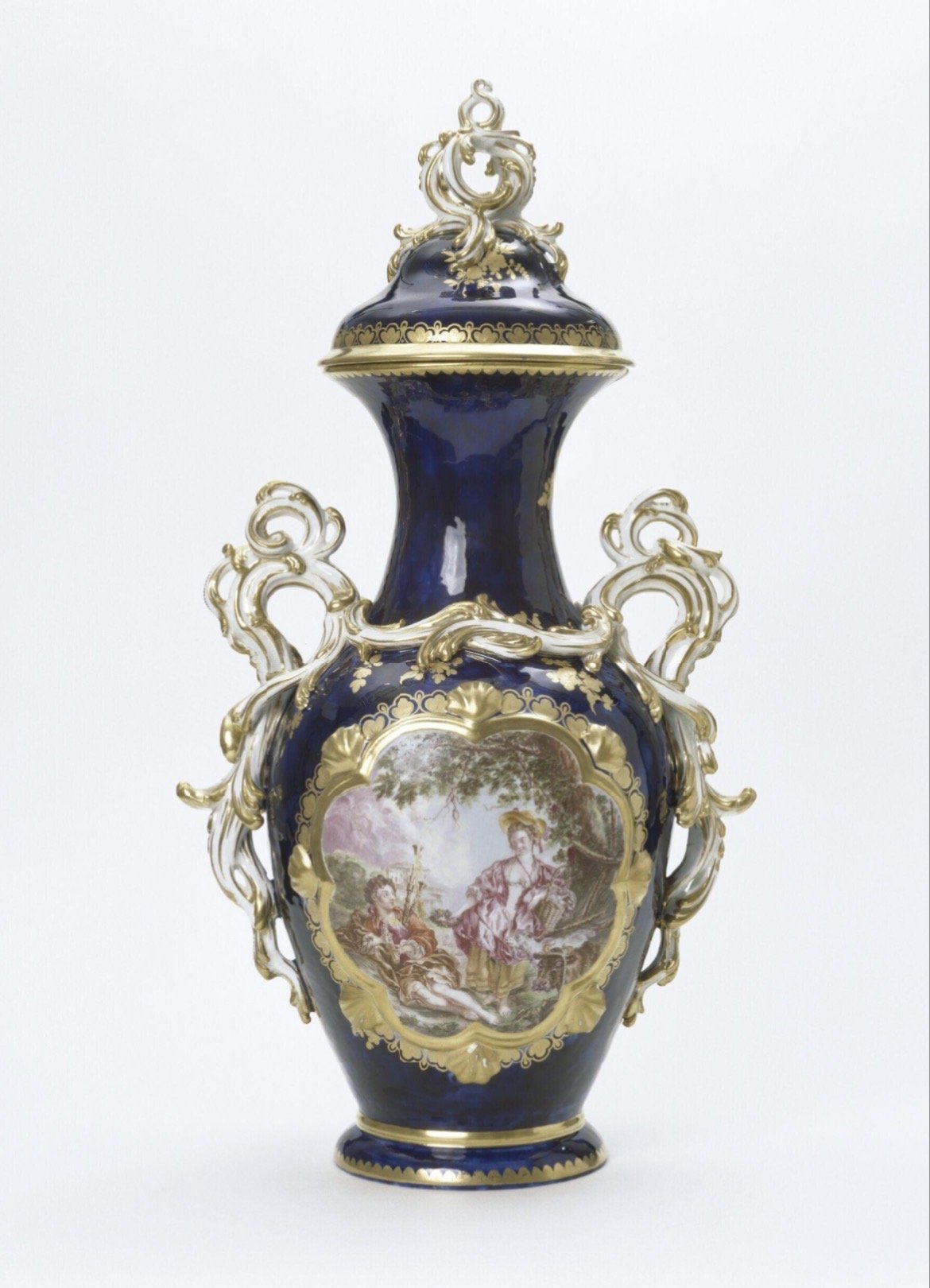
That blue — the one that had traveled from barbaric to royal, that bore the name of a man from Abruzzo — found its way into the finest porcelain of the era. Workshops at Chelsea, Tournai, and Sèvres used it for their most celebrated pieces, layering glaze, enamel, and gilding to achieve exactly that depth: prestigious, difficult, unmistakable. Three centuries later, I found it in a kiln in Brooklyn.
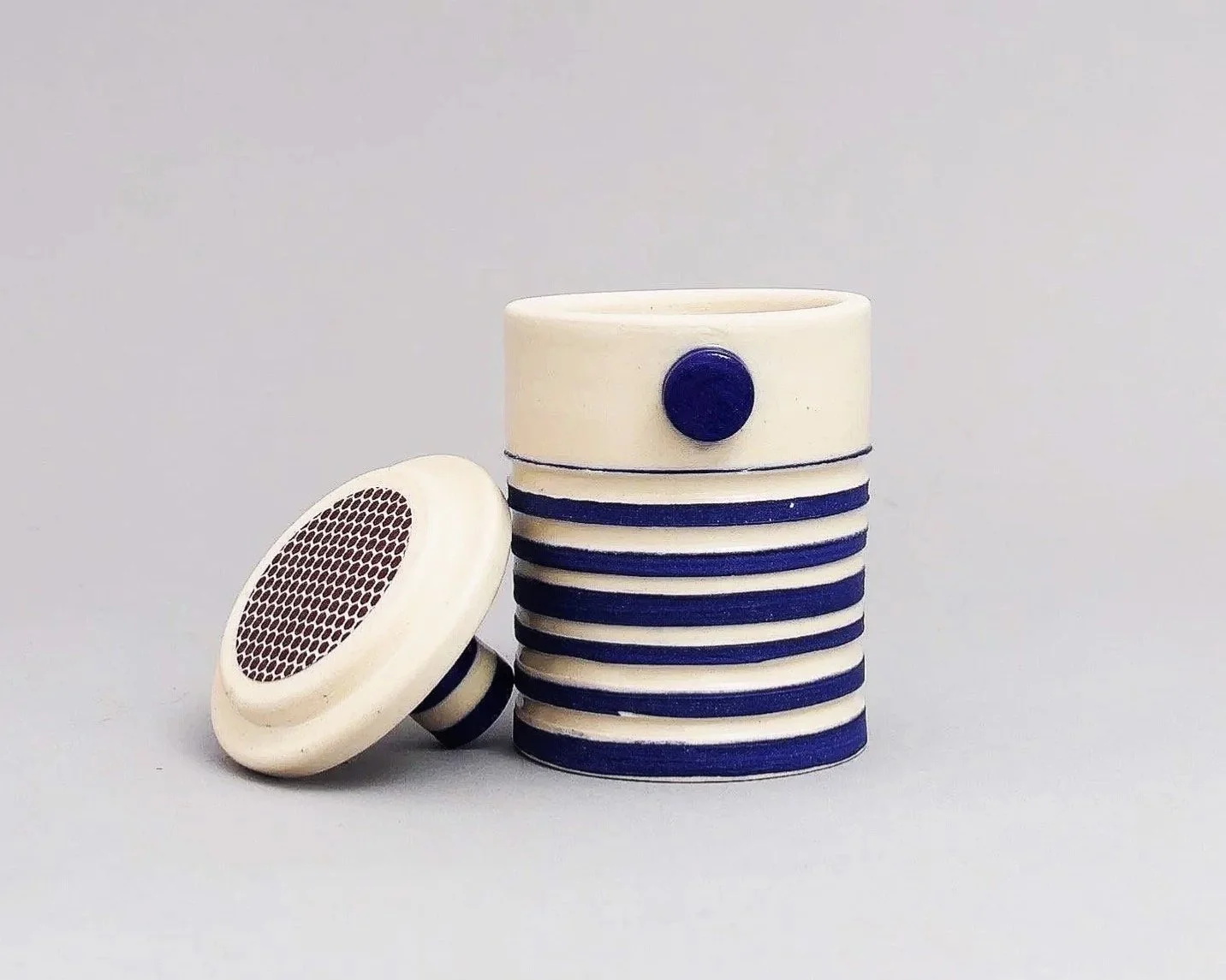
For me, mazarine blue is a shade I now use in two ways: mixed into the Limoges porcelain for my rings, where it runs through the entire form — mineral, permanent, inseparable — and as a slip or colored clay dots on my functional ware, where it becomes a surface gesture rather than a body.
For me, mazarine blue is a shade I now use in two ways: mixed into the Limoges porcelain for my rings, where it runs through the entire form — mineral, permanent, inseparable — and as a slip or colored clay dots on my functional ware, where it becomes a surface gesture rather than a body.
I'm also slowly working it into my brand color palette. It isn't finalized yet, but I know this blue belongs there. Some colors you choose. Others you find in the kiln, look up out of curiosity, and realize were already yours.
Pastoureau, Michel. Blue: The History of a Color. Princeton University Press, 2001.
Image. Victoria and Albert Museum collection, vam.ac.uk — specifically The Foundling Vase, Chelsea Porcelain Factory, ca. 1762–3, accession number O77951. Image © Victoria and Albert Museum, London.