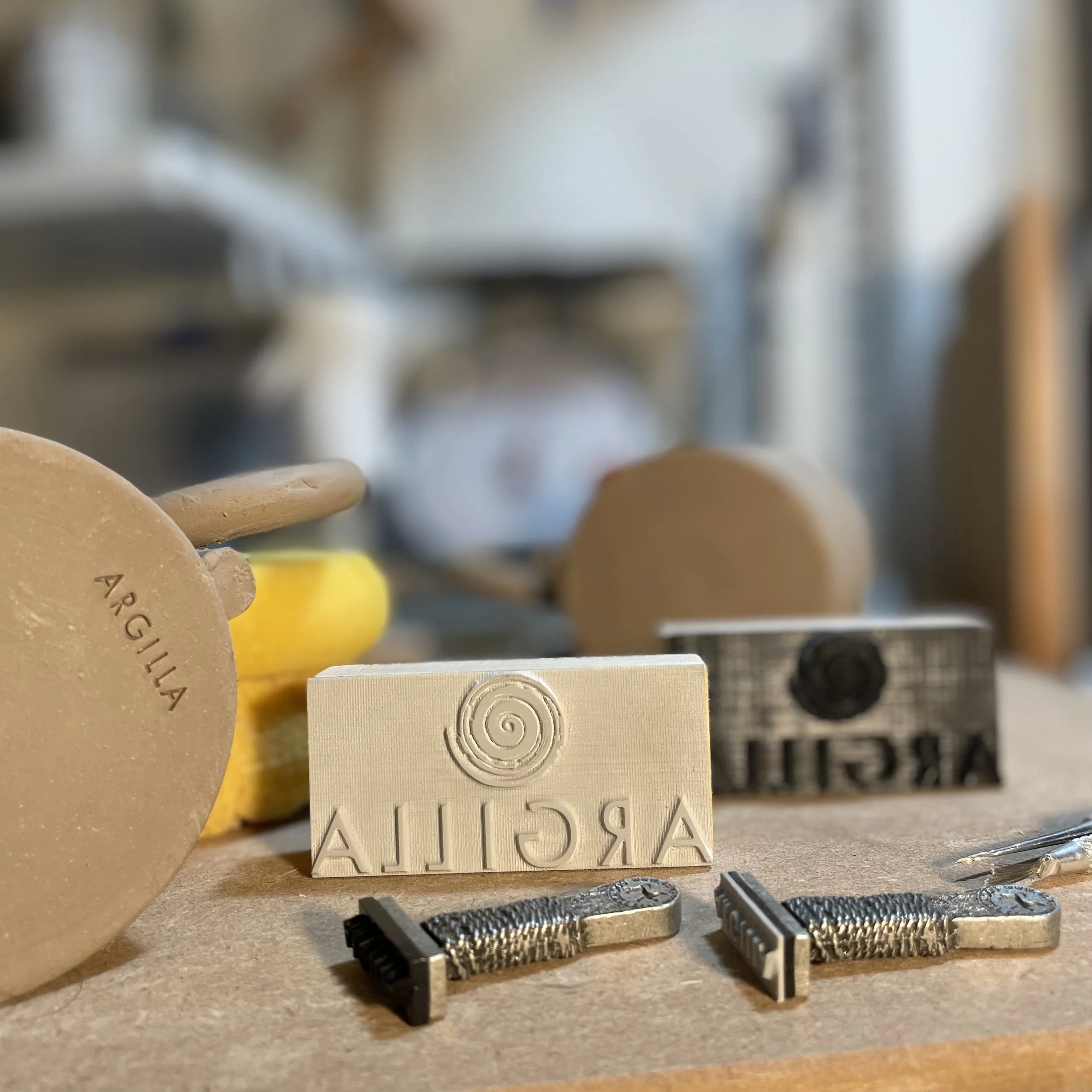
Why Argilla NYC?
On argilla, the carrier bag, and why the material gets its name on the door.
Argilla is the Italian word for clay.
From the Latin argilla, from the Greek árghilos, from argós: white. The white clay.
Before bronze, before iron, there was the vessel. Grain stored for winter. Oil carried across a distance. Stories pressed into tablets and left to dry in the sun, some of which survived without ever seeing a kiln. The anthropological record of what a culture valued is largely a record of what it chose to put in clay. The material is so old and so constant that naming a studio after it feels less like branding and more like acknowledgment: this thing was here before me and will be here after.
Ursula Le Guin wrote, in her essay The Carrier Bag of Fiction, that the first human tool was not the spear but the bag. Not the weapon but the vessel. Civilization begins not with conquest but with gathering, with the decision to carry something forward. The container is the first technology, and the first story. I encountered that essay before I made my first piece of ceramic work, and it stayed with me the way a true thing does, quietly, until it became obvious.
Clay needs almost no tools. Your hands, the material, fire when you want it to last. You can forage it from the ground, work it with your palms and fingers, shape something that will outlast you. The knowledge of how belongs to everyone who has hands. It is that kind of gift, the kind that cannot be taken back once it has been given, that passes forward without diminishing.
I named the studio Argilla because the material deserved the name on the door. Not the maker. Not every piece carries my name. Argilla is an old word for an old material. I borrowed it.