Brooklyn Threads
On bolts, screws, and what East Williamsburg leaves in the clay.
In summer I ride a city bike through East Williamsburg in the evening, when the light is golden and the streets are quieter. I live here. I know the blocks, but the light changes what you notice.
I started stopping at the scrap yards. What caught me first were the bales stacked outside the entrance: compressed rectangles, each one made from a single category of object, crushed to the same dimensions. A bale of metal pipes. A bale of old chairs, still faintly colored. Coils of wire. Grids pulled from air conditioning units, rusted at the edges. The neighborhood had organized its waste into forms that were almost architectural, almost absurd, without meaning to. Once, an employee let me inside. Only then did I understand where the bales came from — pyramids of scrap, taxonomized by category, piles as tall as a two-story building, in a small hidden block I would never have guessed from the street.
Ruins in reverse is what Smithson called certain places like this. Not things that fall into ruin after they are built, but things that rise into ruin before they become anything else. The pipes and fittings and bolts are already past their first life, waiting for the next one. For Smithson, decay and disorder were not tragic but a vital cycle of creation.
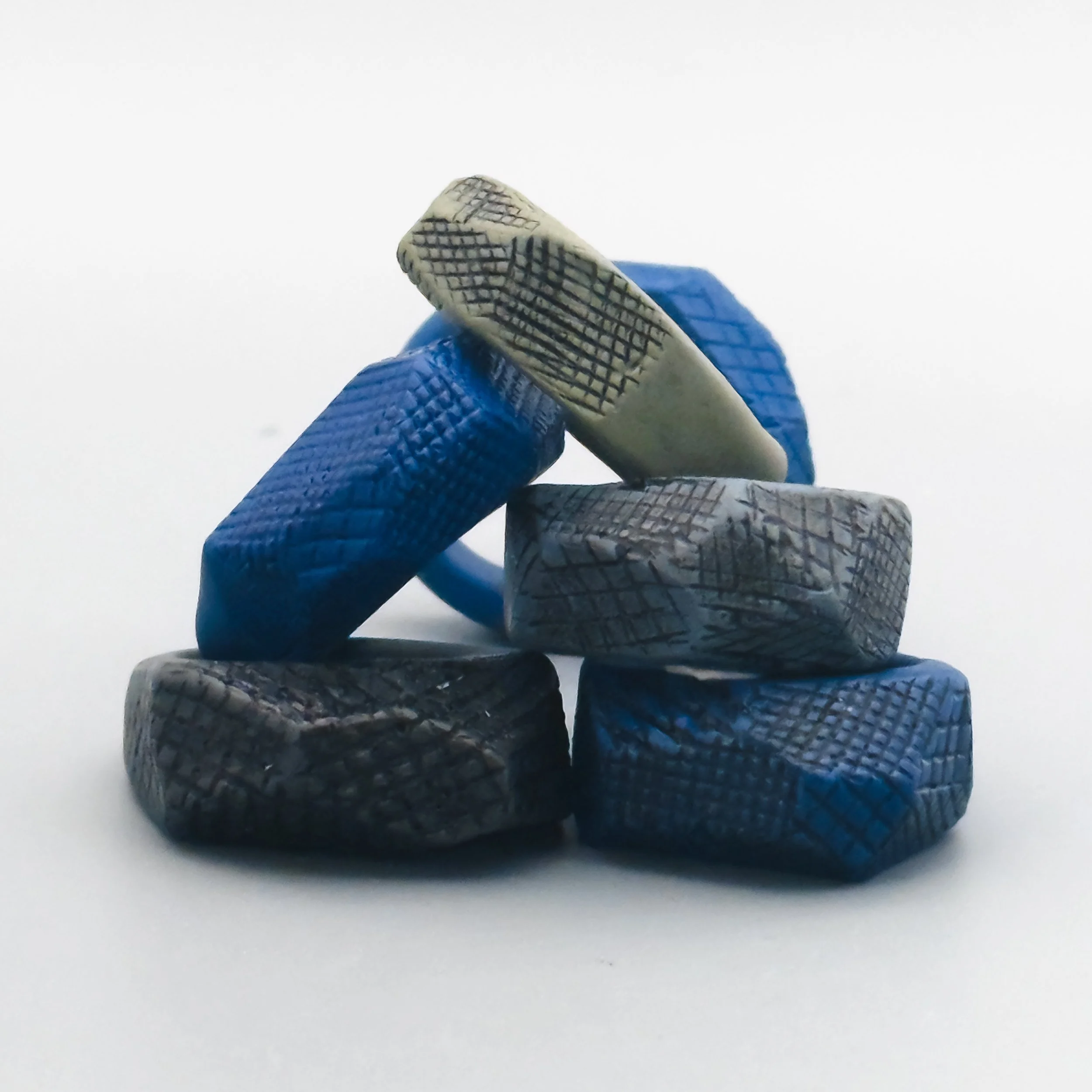
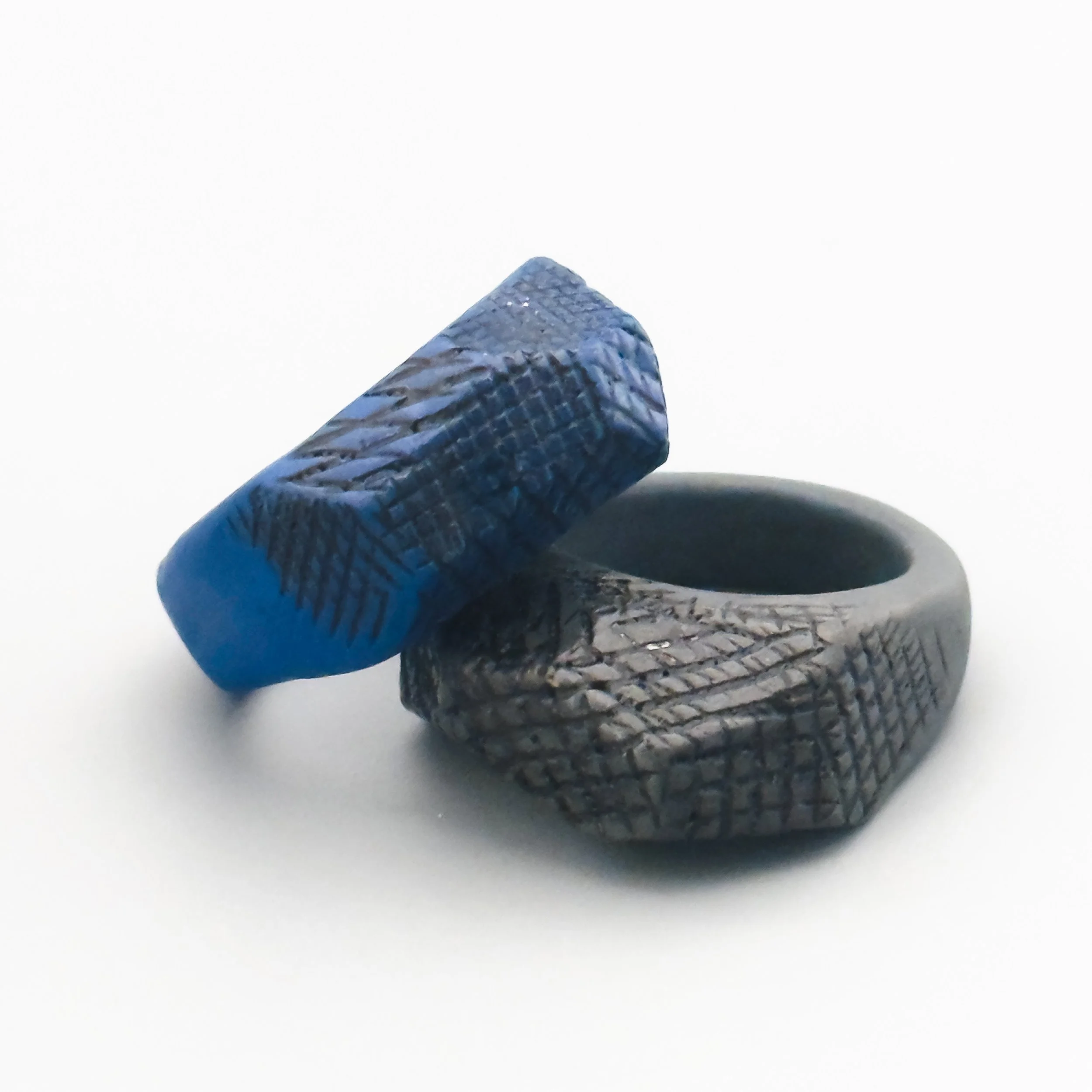
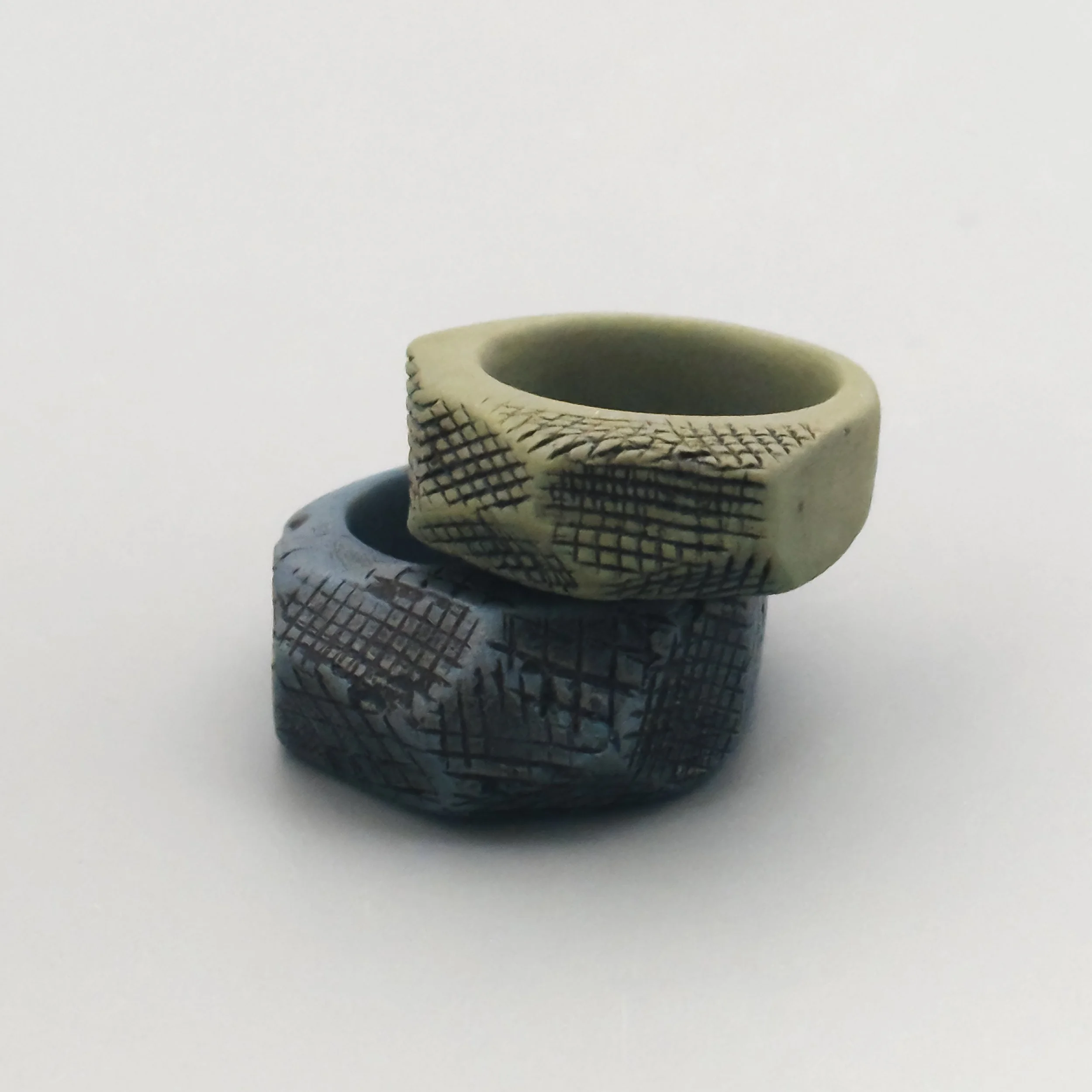
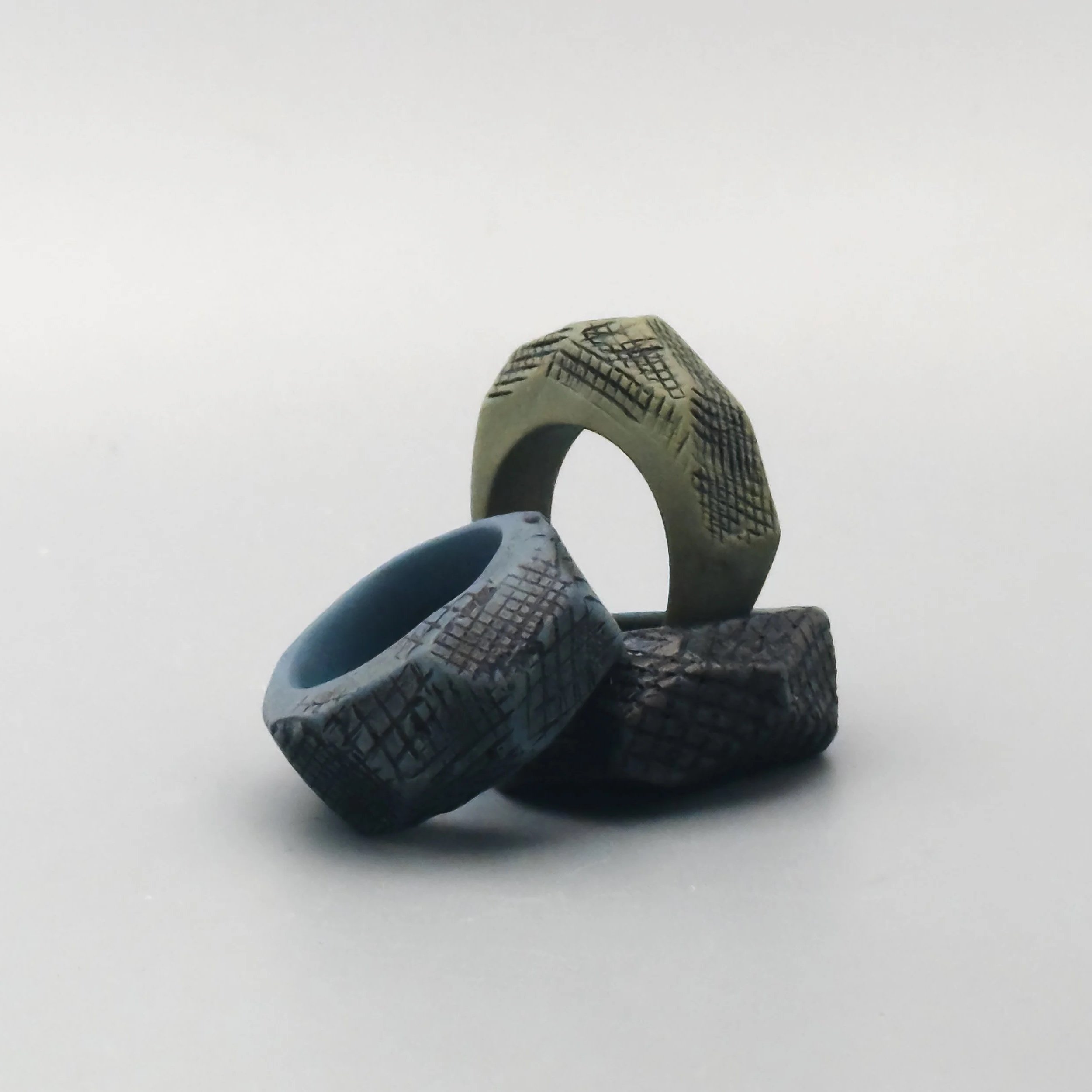
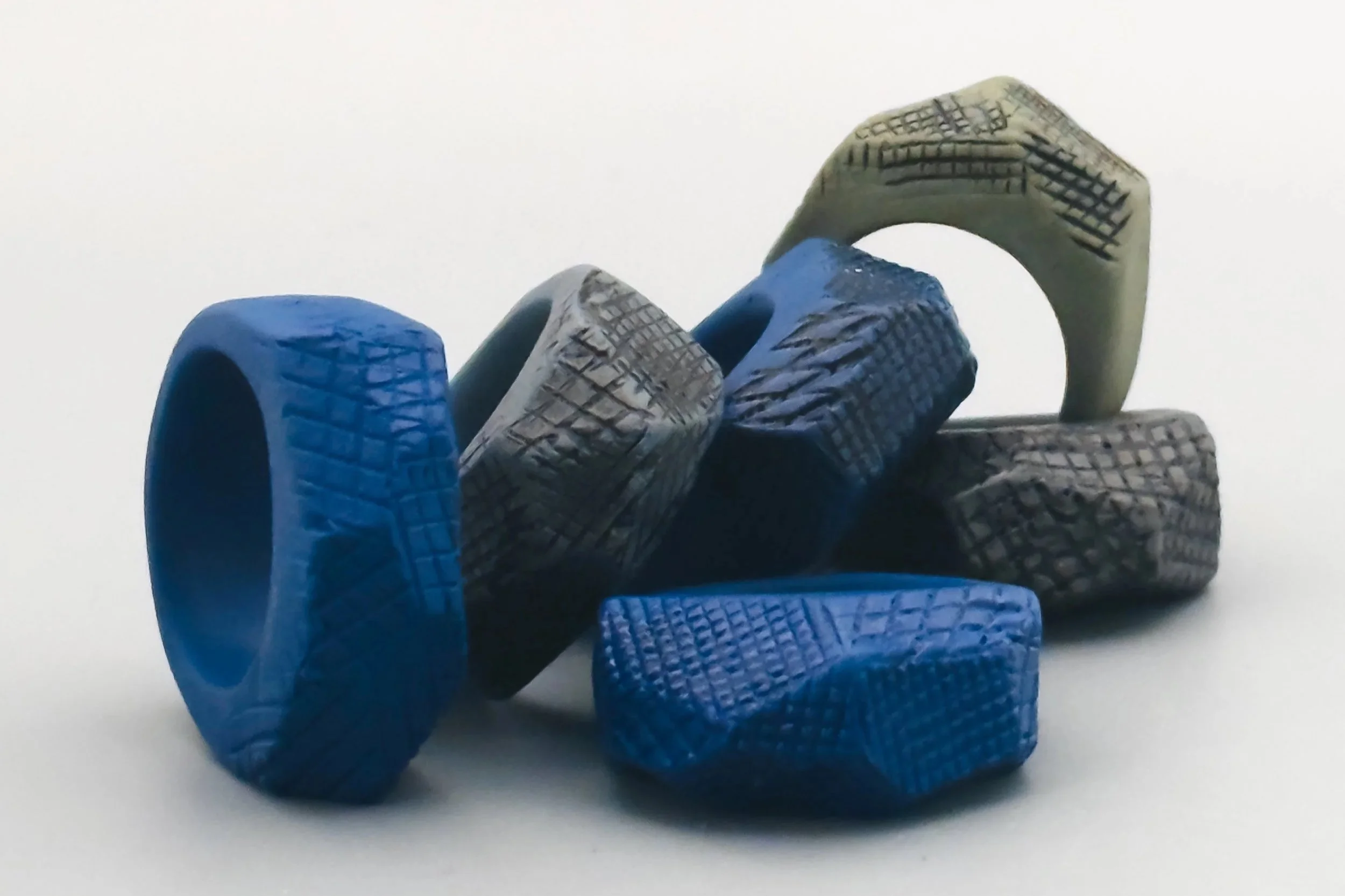
I picked up a screw. Pressed it into soft clay and pulled it away. It leaves itself behind exactly — the thread, the ridge, the negative of pure function, repeated with a precision no hand could match. A bolt. A coil. A section of metal grid. Each one presses its logic into the porcelain and pulls away. Out of the kiln: matte, precise, delicate. Stripped of everything it was designed to do. What remains is a surface, a pattern — the impression of something that was never meant to be looked at.
Smithson, Robert. "The Monuments of Passaic." Artforum, December 1967. Reprinted as "A Tour of the Monuments of Passaic, New Jersey" in Robert Smithson: The Collected Writings, ed. Jack Flam. University of California Press, 1996.