

Why Panem et Circenses?
On a bread plate, a Roman accusation, and a phrase that does its work quietly.
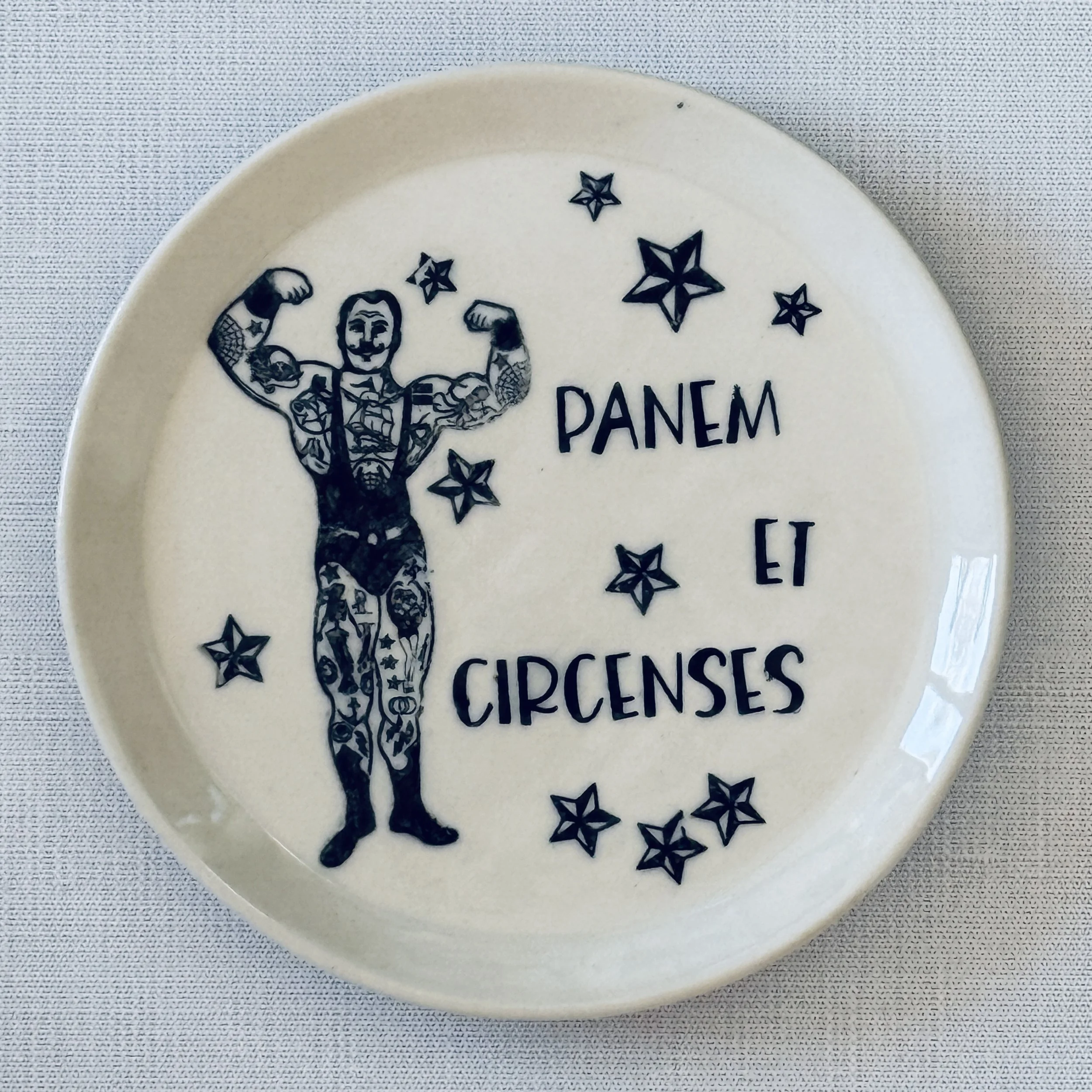
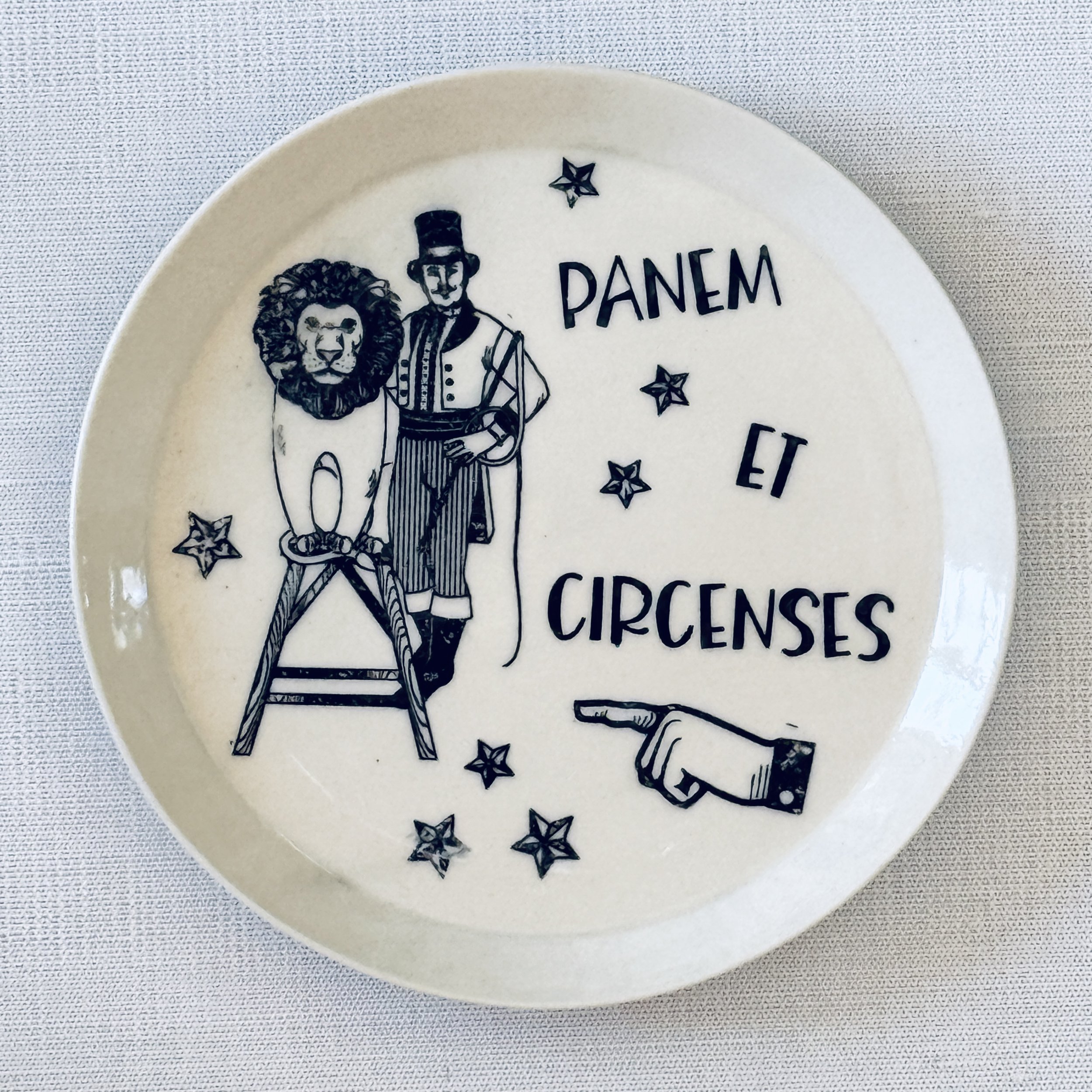
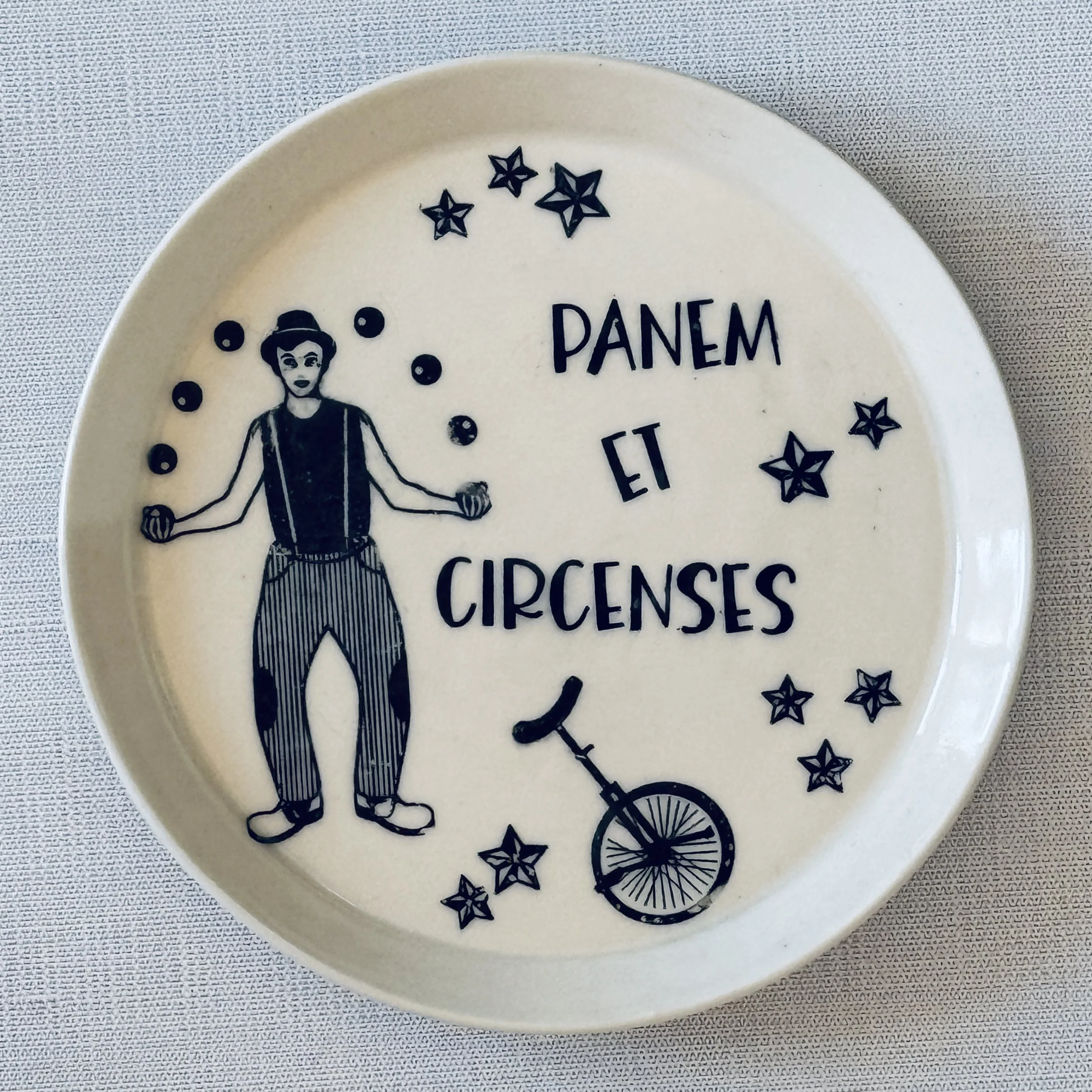
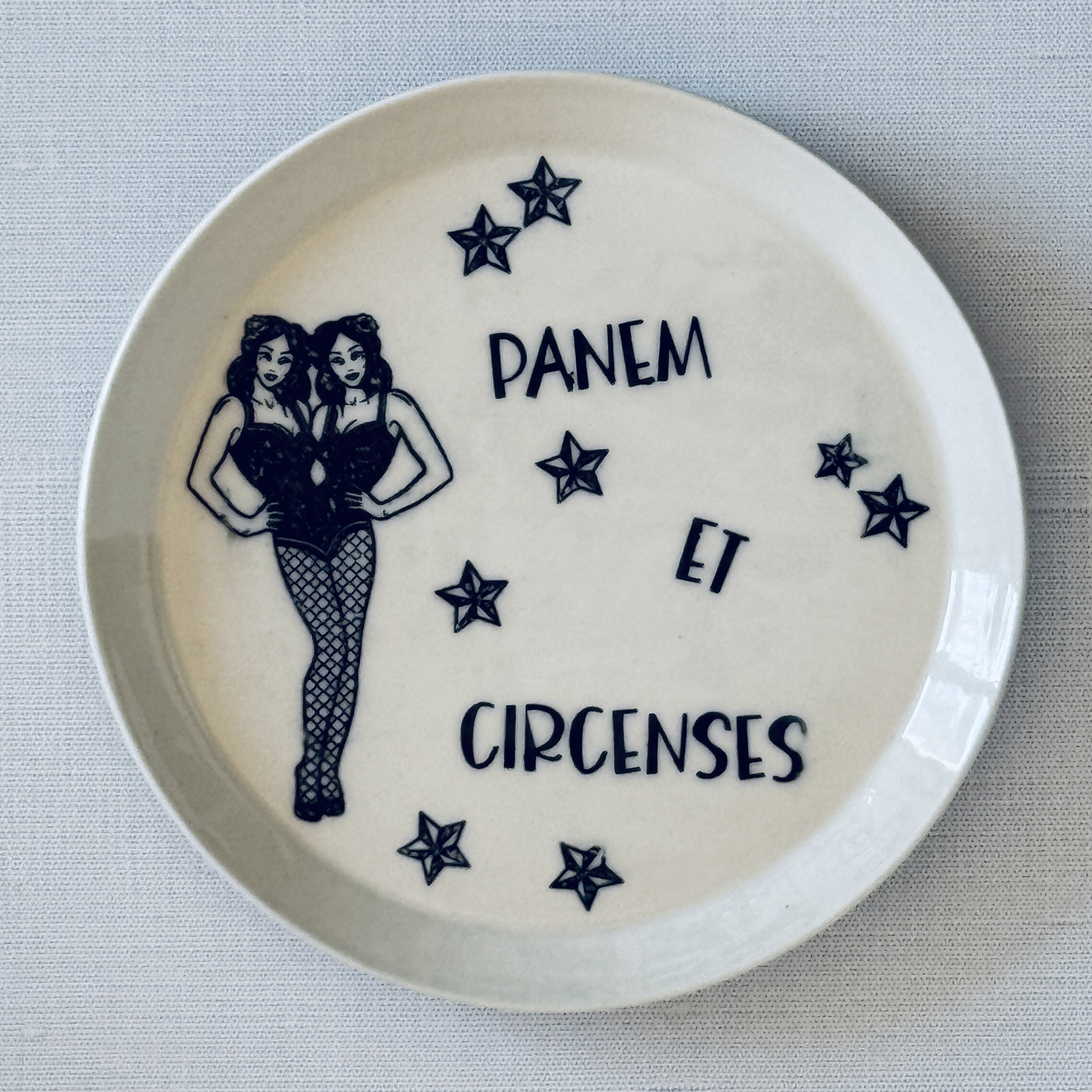
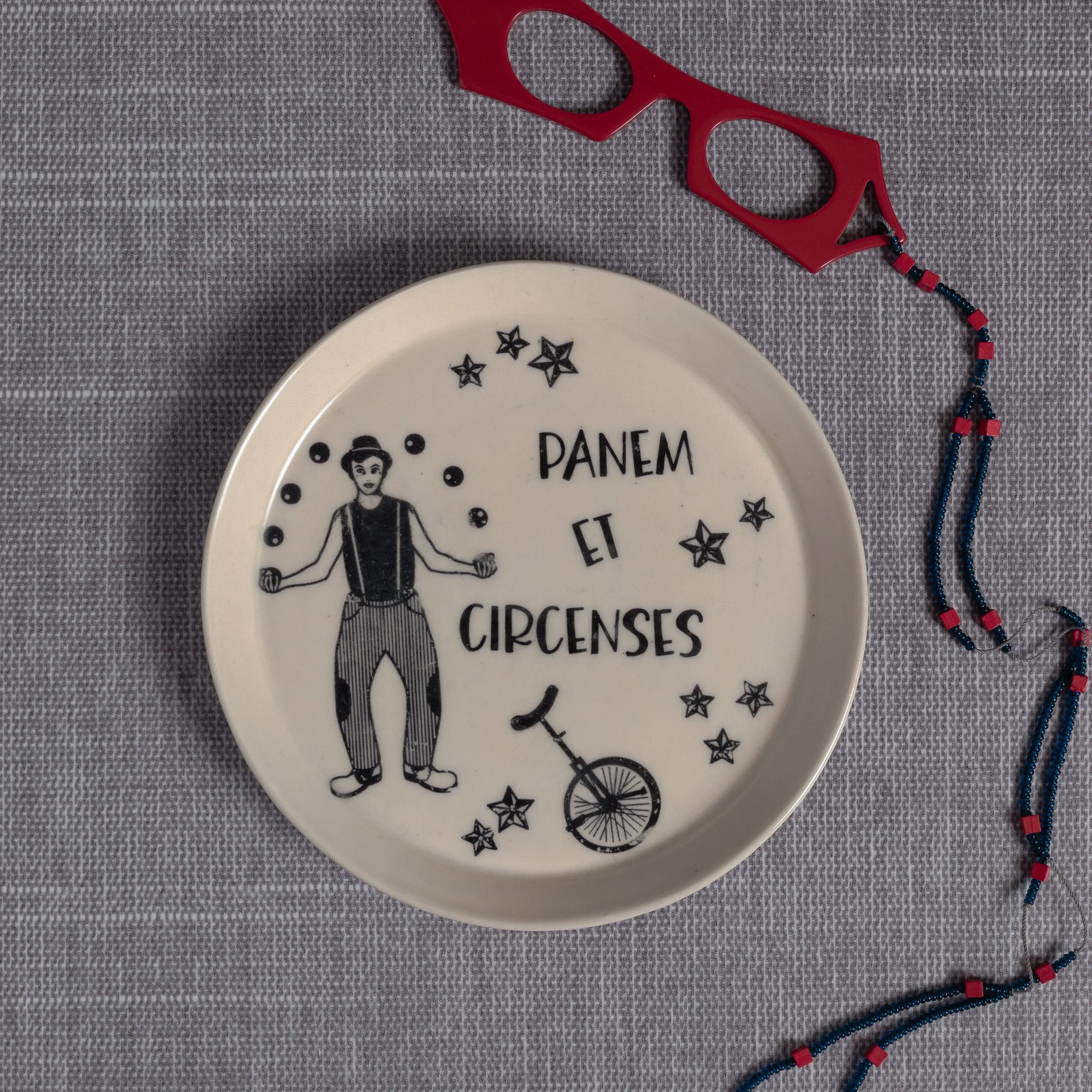
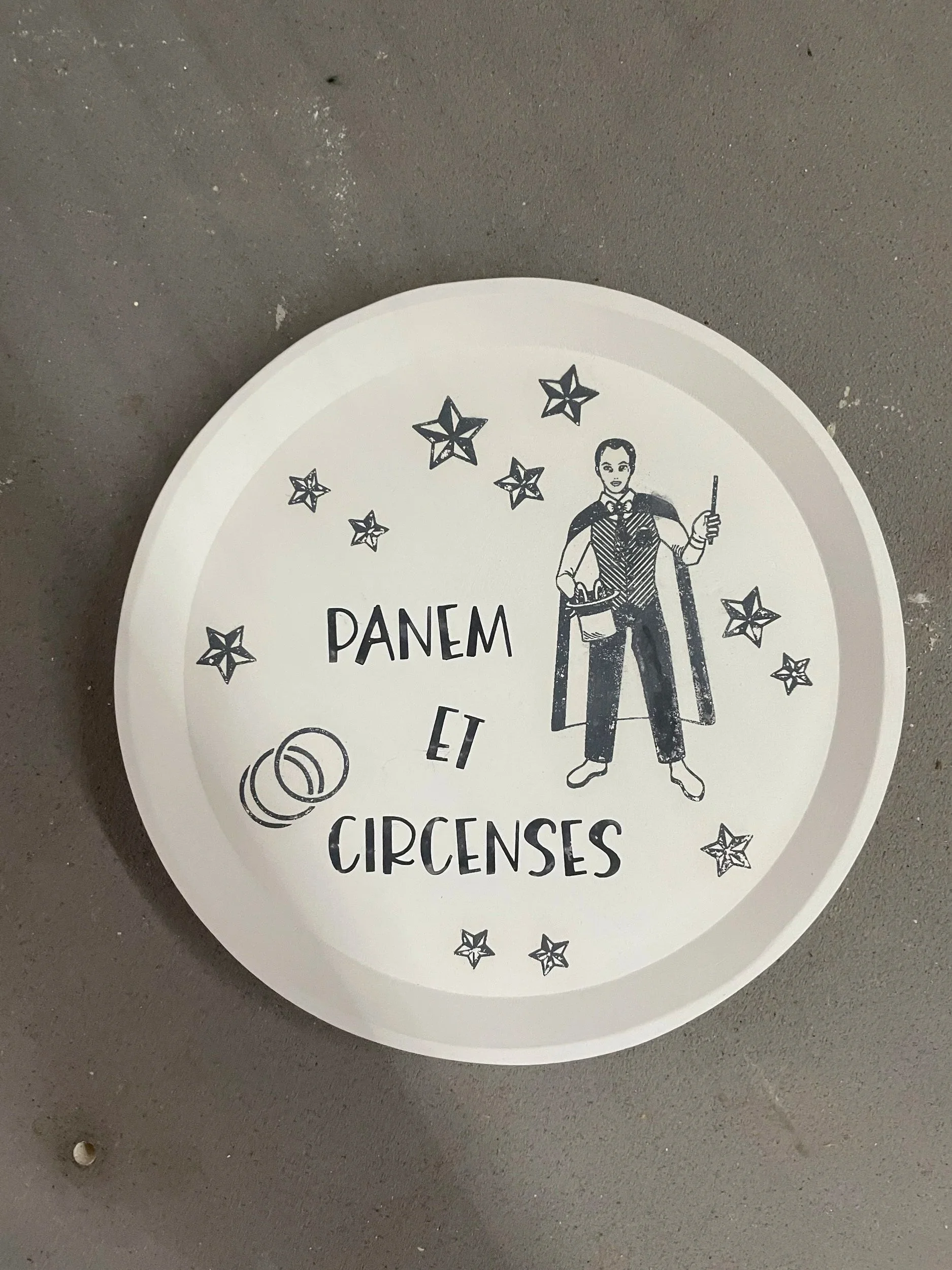
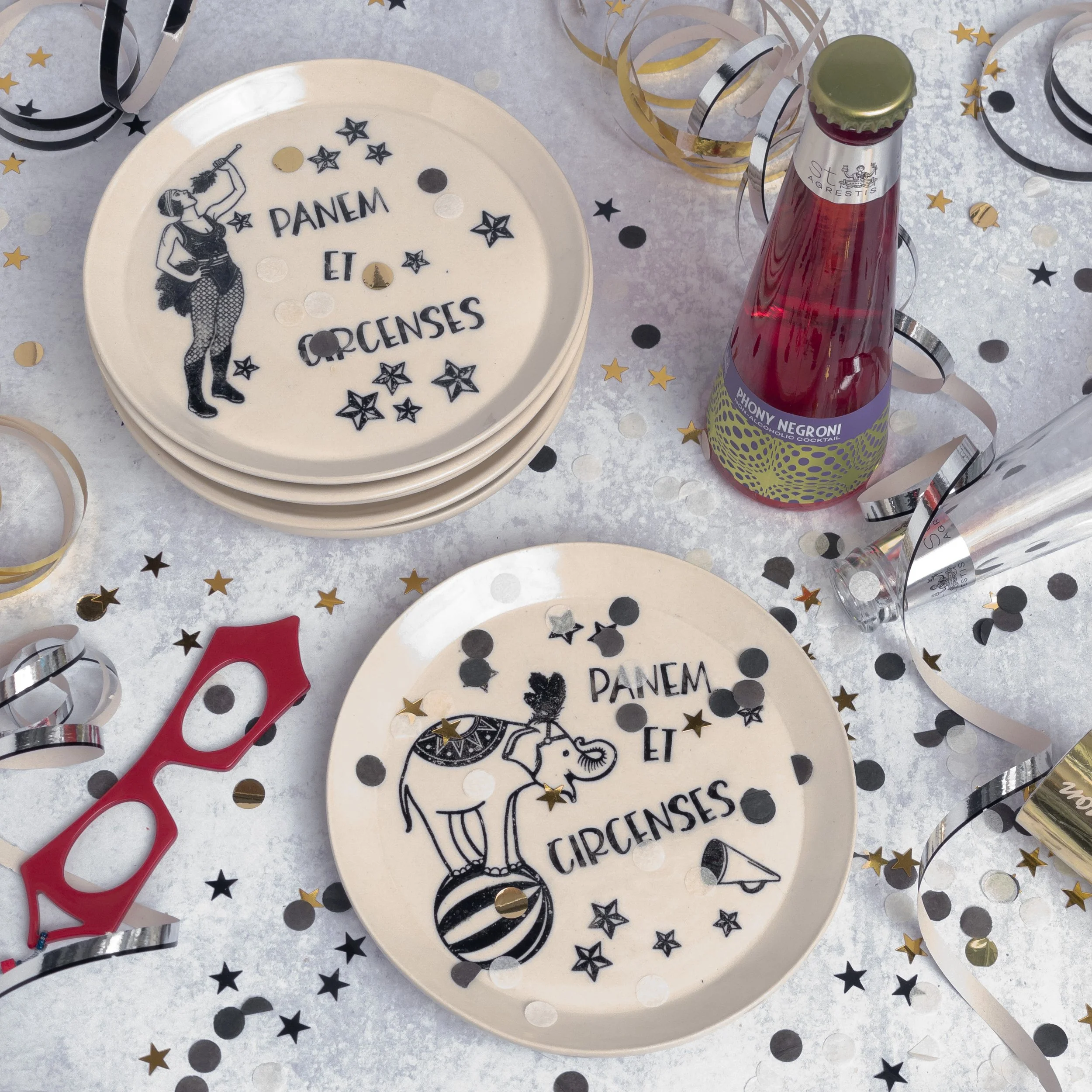
You pick it up and the first thing you see is a circus performer. Black figure, bare porcelain, clear glaze. Around the edge, in small letters, a Latin phrase and a scatter of stars. If you know the Latin you laugh. If you don't, you look it up, and then you laugh.
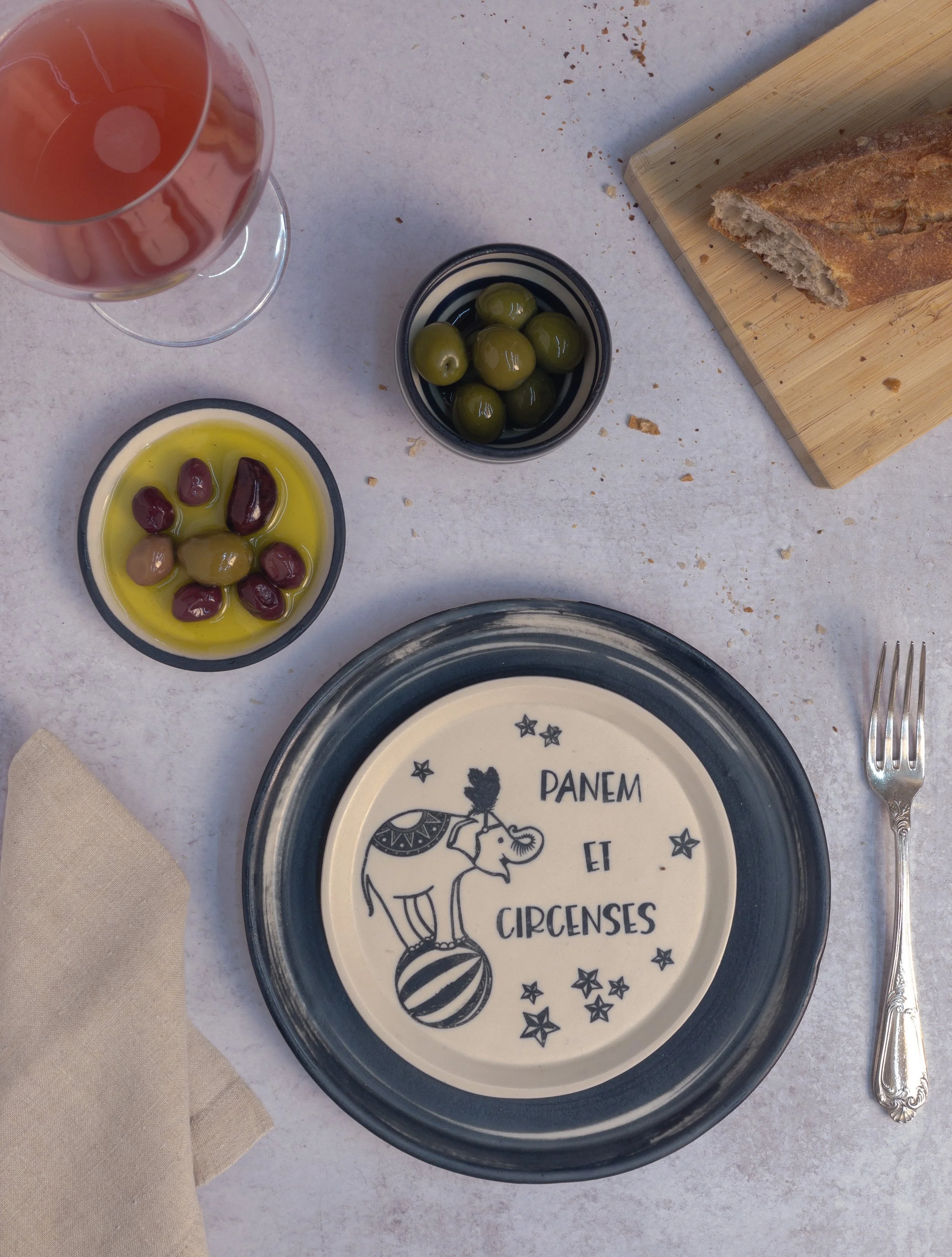
Panem et circenses. Bread and circuses. In Italy you don't learn this phrase, you absorb it. It appears in conversations about elections, about public television, about whatever the news is doing that week. A diagnosis, not a definition. When the circus is very loud, look at what is happening where there is no circus.
Iuvenal wrote it around the first century, describing a mob that had traded political agency for grain and spectacle. Keep people fed and entertained and they will not ask too hard about who is governing them or how. Two thousand years later the diagnosis still travels.
I kept thinking about the first word. Panem. Just bread, the thing my father insists goes on its own plate, never on the cloth. But the bread in the phrase was never only bread. It was the Annona, the state grain dole, handed out by whoever held power, because a fed crowd is a quiet one. The accusation lives inside the most ordinary word on the table. It always did.

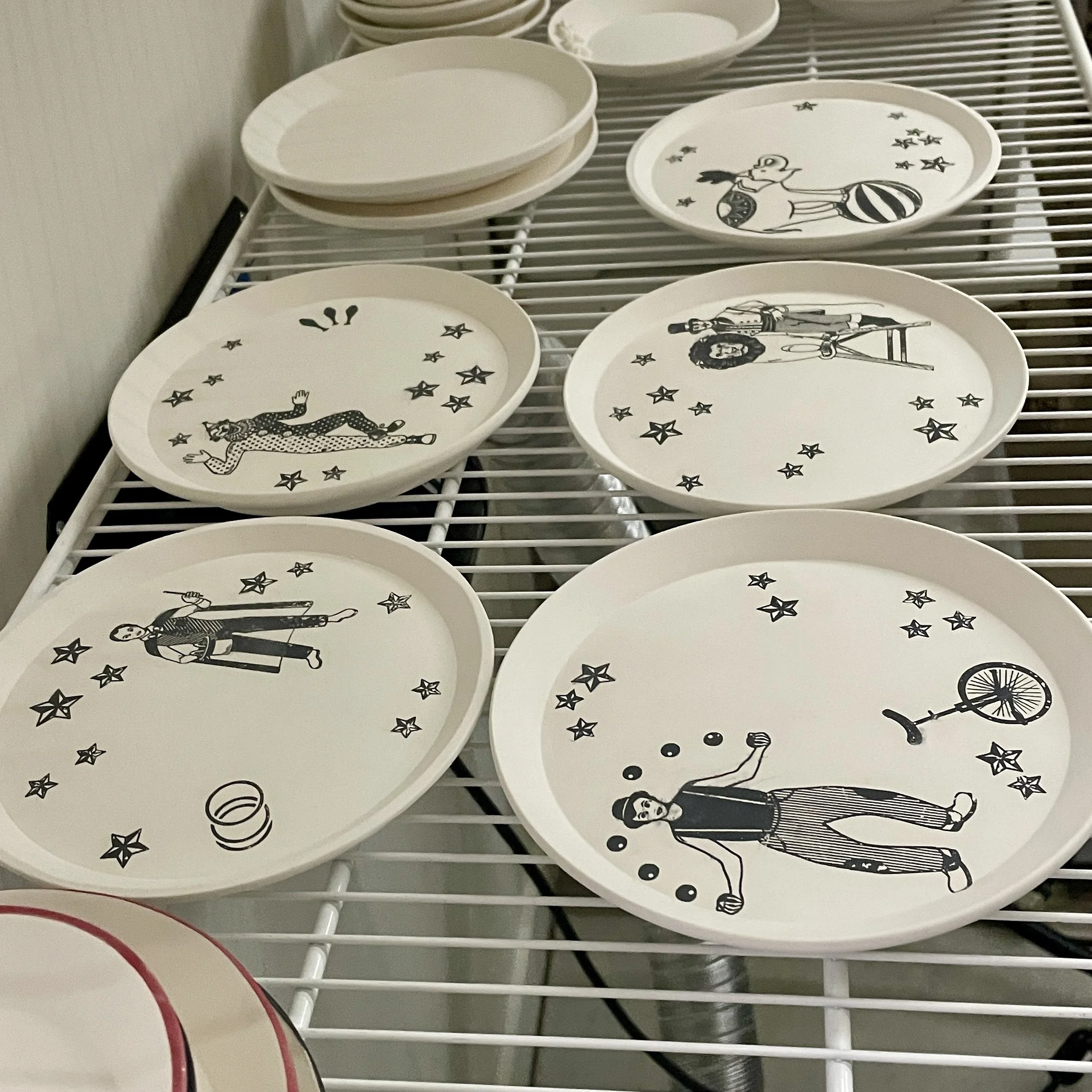
So the plates became the circus, with full commitment. Each one carries a figure from the classical ring: the strong man, the juggler, the fire breather, the lion and his tamer, the snake charmer, the elephant. Black figures on bare porcelain, the phrase circling each one, small stars scattered around it. My father asked for bread plates for his formal dinners. I gave him these. When he read the name he laughed. That was the right response.
There is something strange about putting a political accusation on a bread plate. Strange, and I think honest. The plate is not in opposition to panem et circenses. It is part of it. What my father wanted was the small ceremony of the table: bread in its place, a plate that belongs there, a dinner where the effort of making things beautiful is felt without being mentioned. That too is a kind of theater. These plates just say so, out loud, in Latin.
The circus performers have been doing their acts for two thousand years. The strong man is still lifting. The fire breather has not run out of breath. The lion has not eaten the tamer.
And the phrase works the way it always has, by being absorbed. The plate sits on the table, holds the bread, says its two words to anyone who stops to read them. Most days no one does. The bread is still bread, and the question is still there underneath it, where it has always been.
Juvenal. Satires, X, lines 77–81. c. 100 AD.