

Why I Made a Match Striker?
On candles, borrowed rituals, and why an Italian maker in Brooklyn ended up with a jar that looks French.
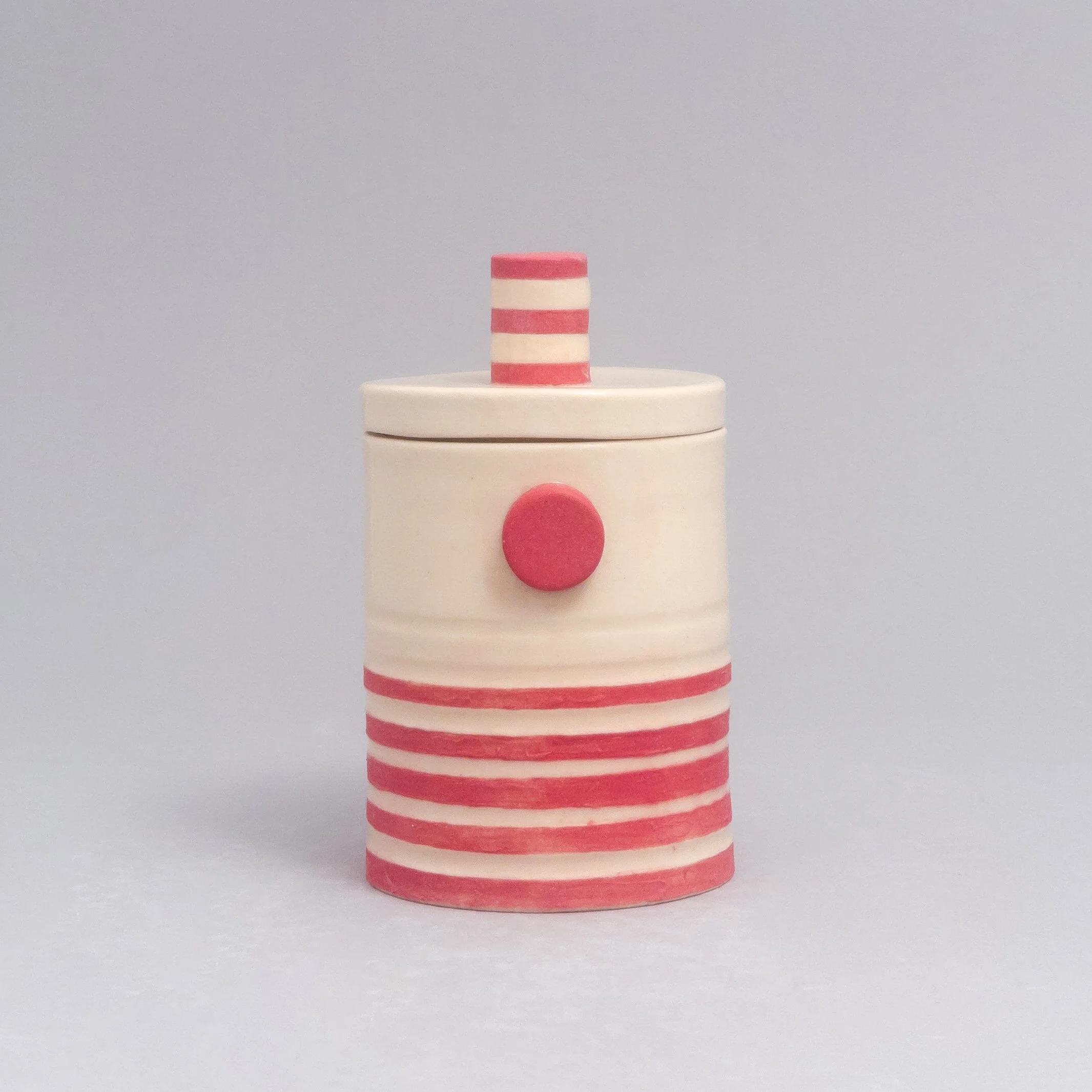
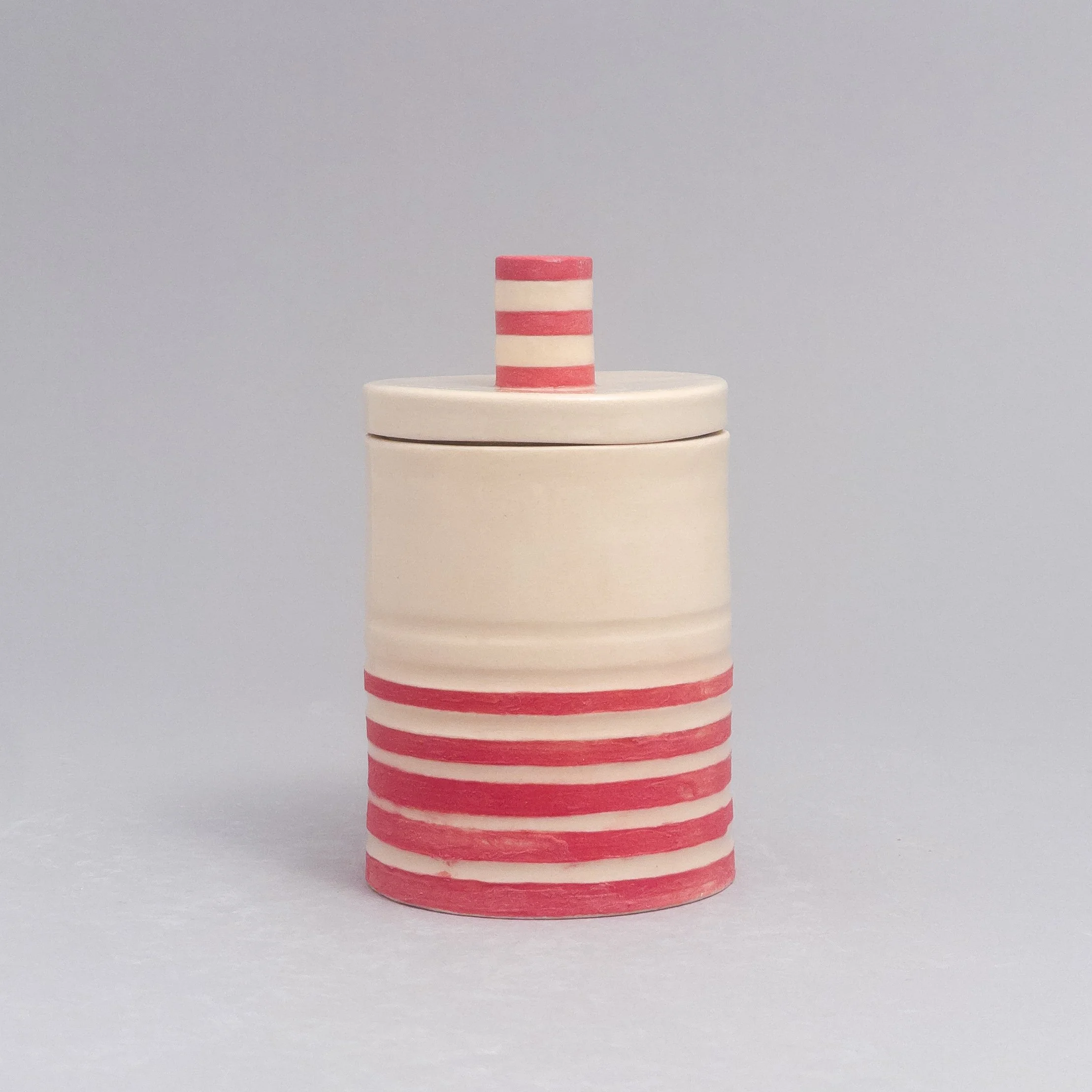
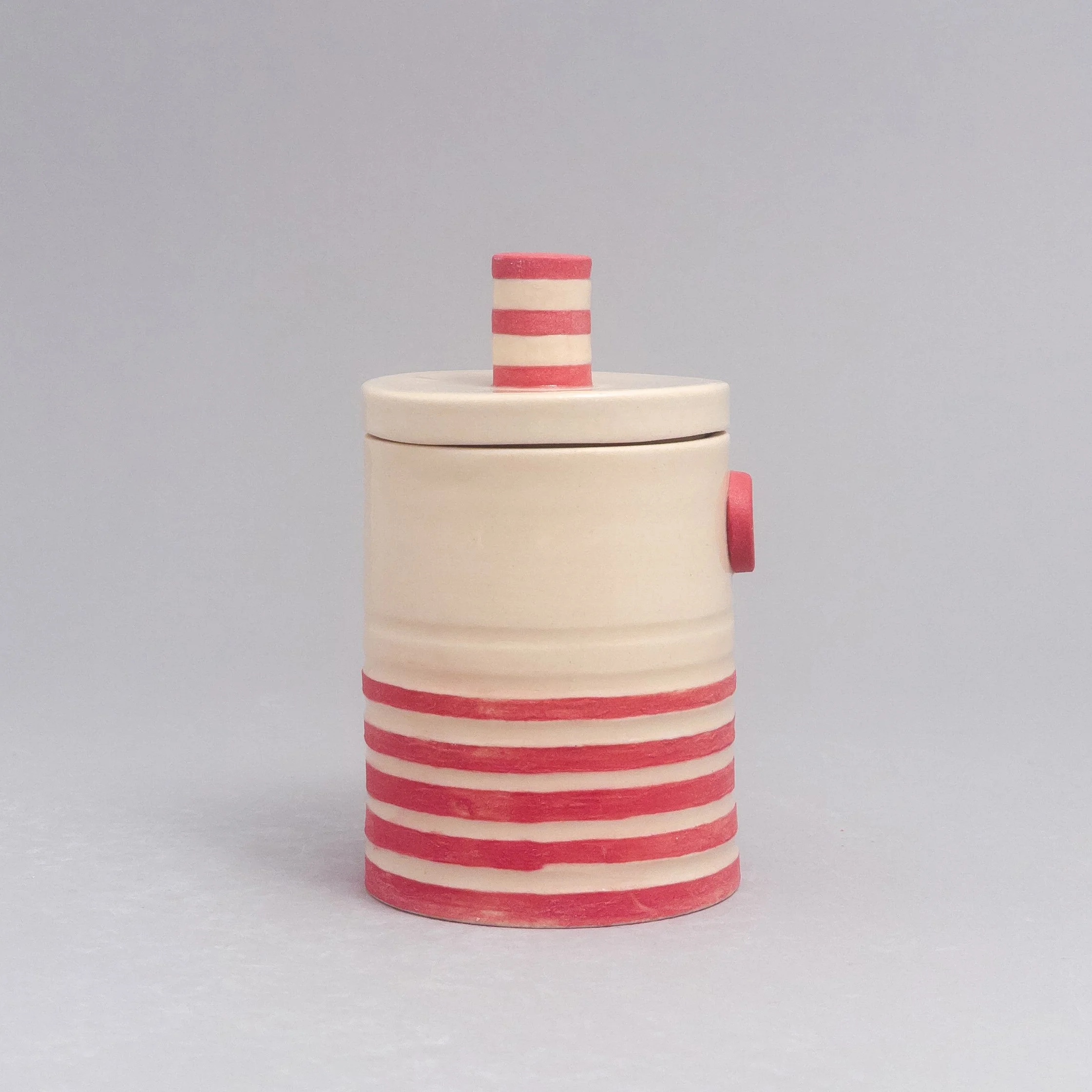
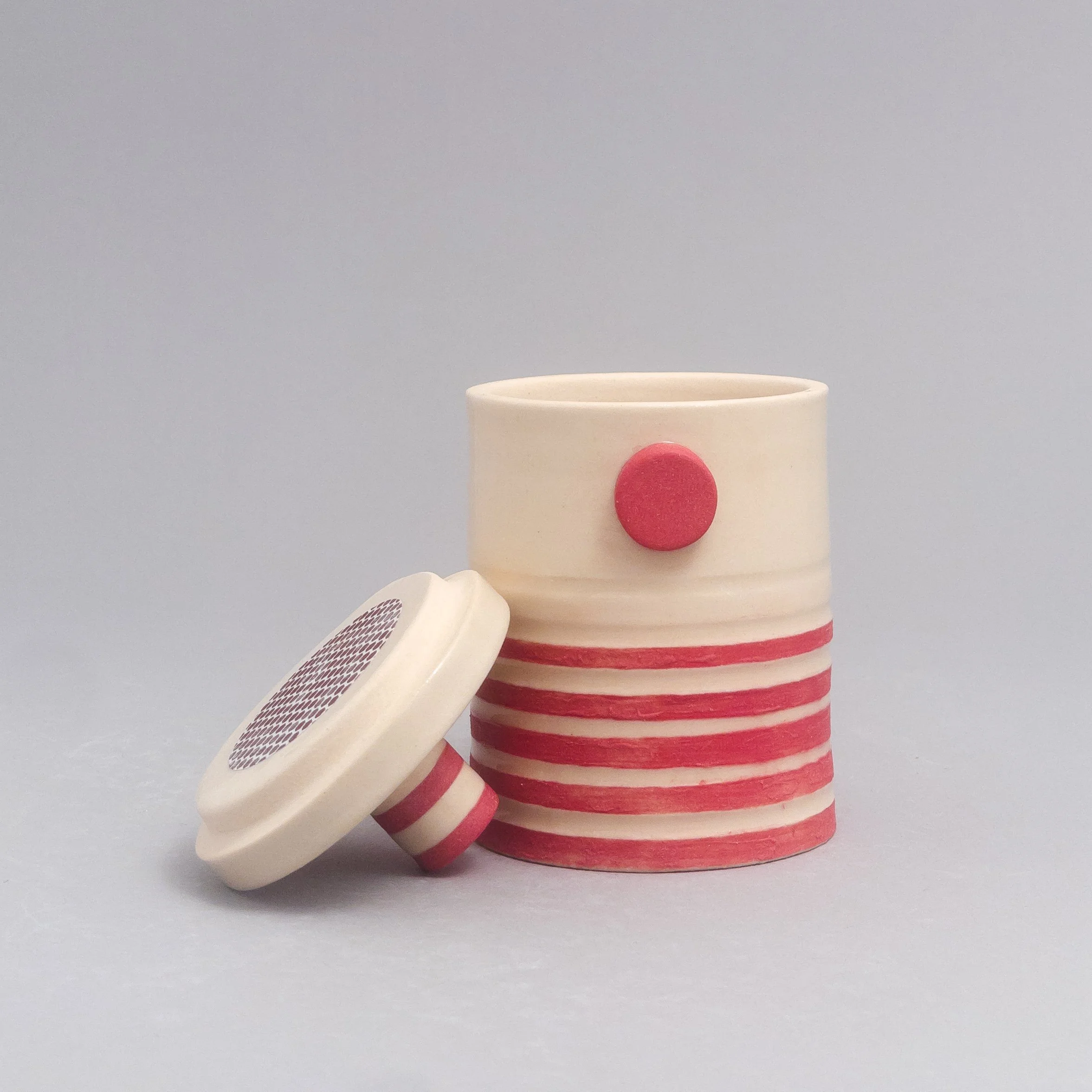
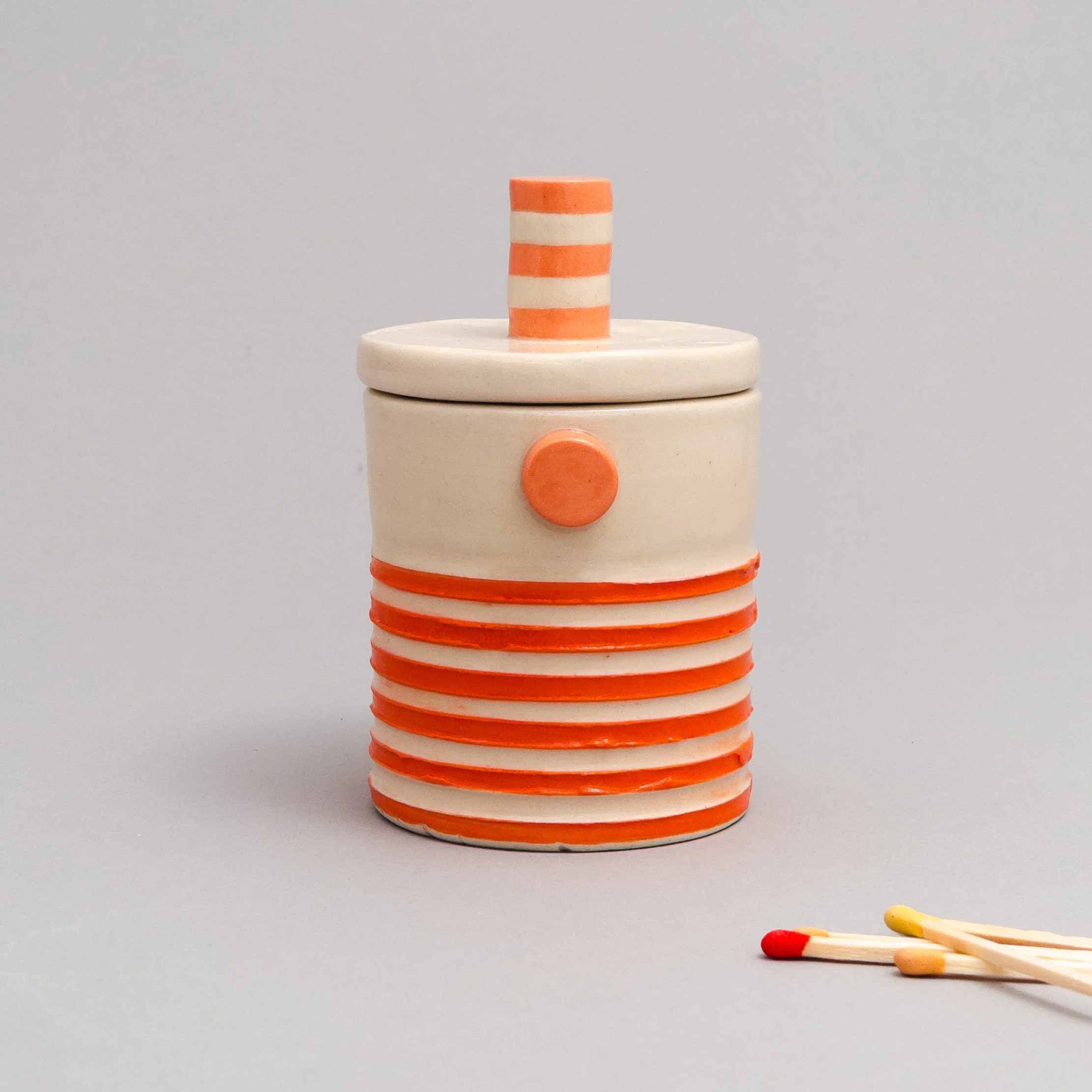
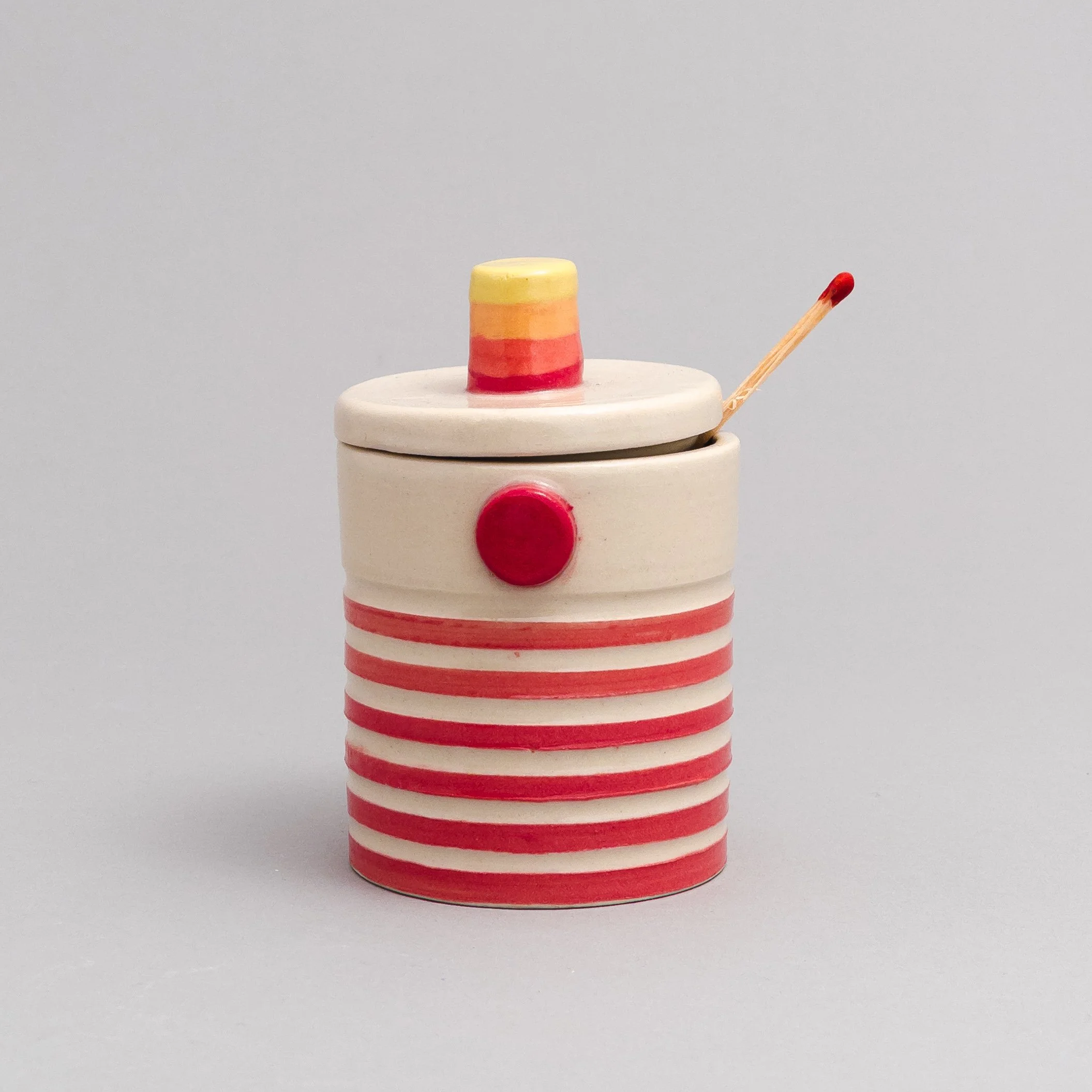
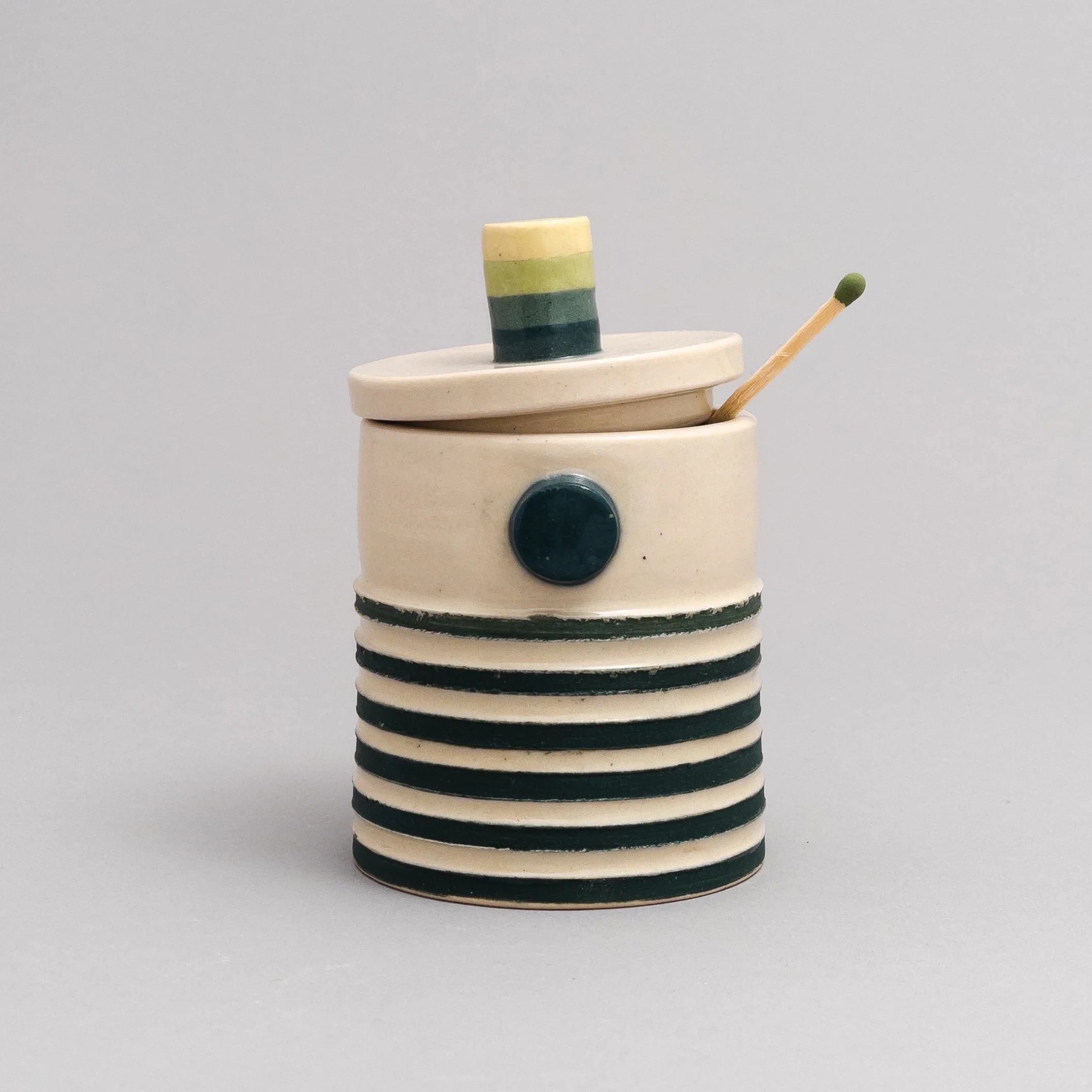
Most evenings I strike a match at the kitchen table. The jar I reach for is ceramic, striped, small enough to hold in one hand — the unglazed stripes rough under the thumb in a way I find satisfying, which is fortunate because that roughness is also what makes them work as a striking surface. I keep a second one in the bathroom, for the reasons anyone living in a small New York apartment will recognize without my spelling them out.
Both jars exist because of a habit I didn't arrive here with. In Italy, candles belong to churches, to formal dinners, to power cuts. The daily candle is something I learned here, in Brooklyn, the way you learn the small rituals of a place you've chosen. You feel it in people's apartments — the low warm light, the matches left out on counters, the sense that this is simply part of how an evening goes. The candle not as ceremony but as atmosphere, the match as a small daily gesture toward making the evening feel different from the day. At some point I wanted a better object for it — somewhere to keep the matches, something that belonged on the table rather than being left out on it. So I made the match striker.
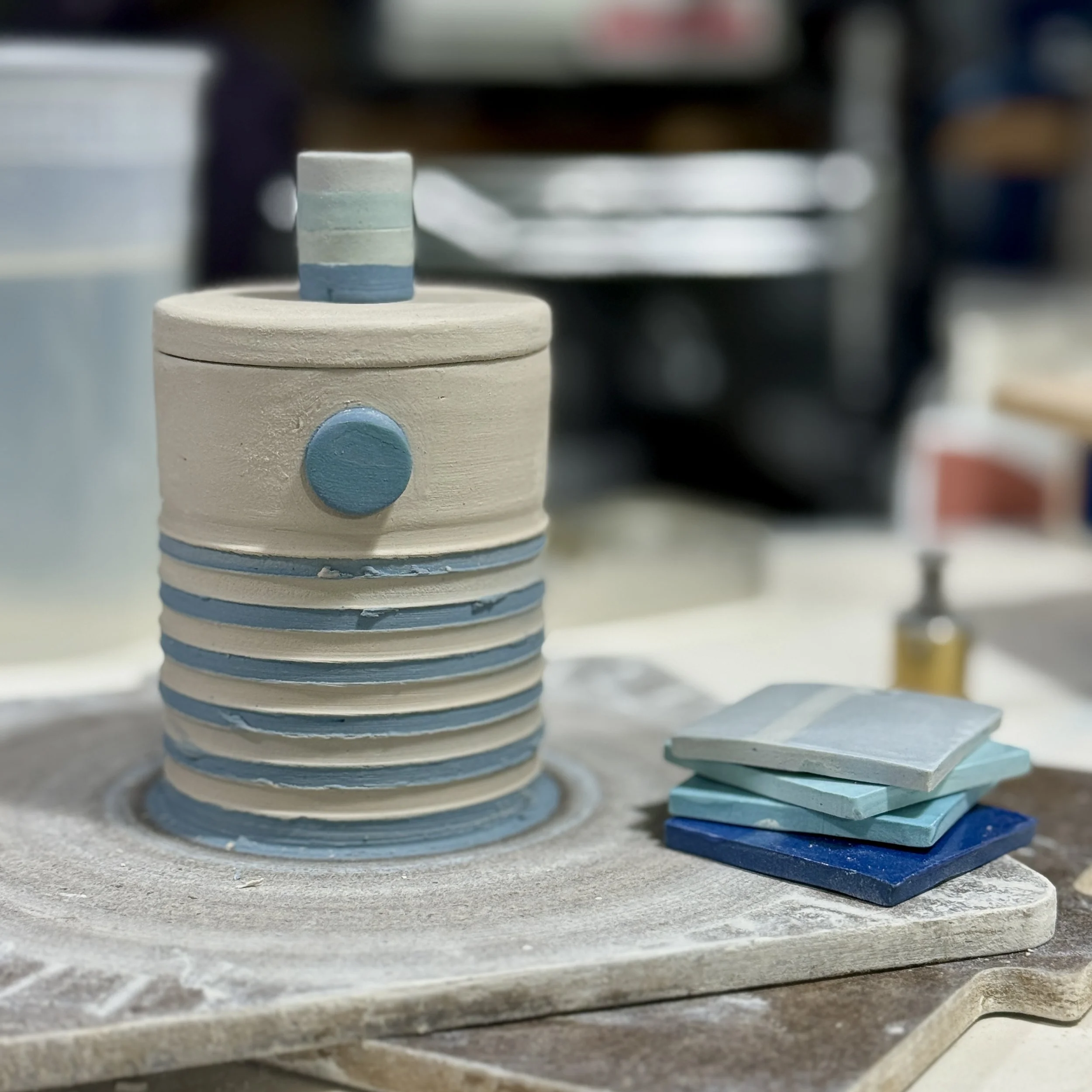
Somewhere in the making I realized I had done this before. I didn't grow up with cupcakes either — in Italy the birthday cake is a proper cake, layered and shared, and the single cupcake with its individual candle is entirely American. When I started making ceramic stands for it, I was doing the same thing without having named it: trying to understand a ritual from the outside by making something for it. You understand a ritual differently when you're making the object that serves it.
Richard Sennett writes in The Craftsman that making things is a way of thinking — that the hand and the mind work together to understand the world. What I've found is that this is especially true when the ritual belongs to someone else's culture. Making the object forces you to understand what it actually needs — its scale, its logic, the precise moment it serves. You can observe a habit from the outside indefinitely and still not quite grasp it. Make something for it, and you have to understand it from within.
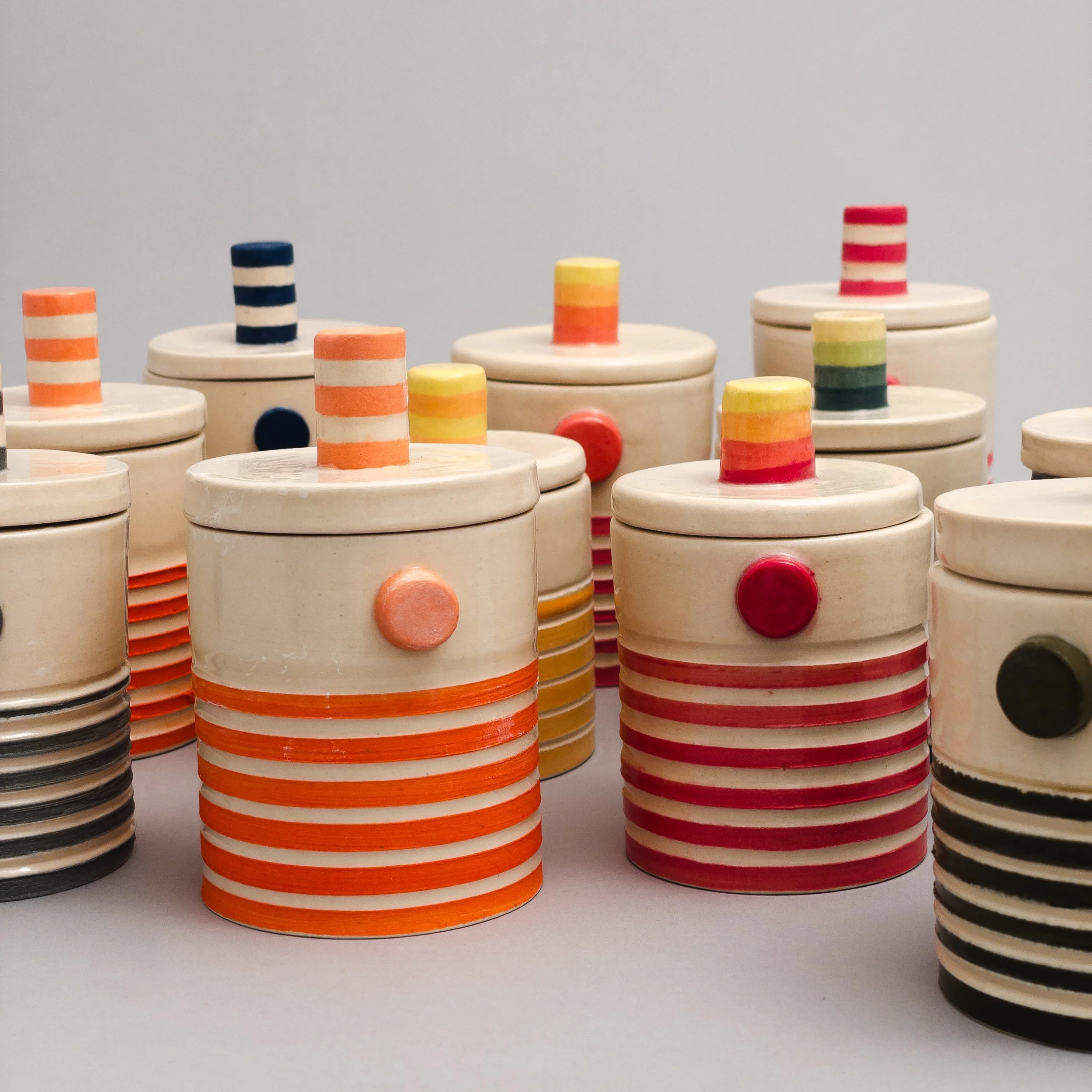
The first time I looked at a finished striker, I felt a small surprise. It looked French — squat, striped, lidded, somewhere between a sailor's kit jar and a toy boat. I'm Italian, and this sat uneasily with me for a moment. But I'd written in an earlier entry about how the maritime world gave stripes their respectability in the 18th century, and perhaps the form just followed that history without asking. I've made peace with it. An Italian maker in Brooklyn, producing objects for American rituals, in a form that ended up looking French. Three places, one small jar. Most evenings I reach for it without thinking about any of that — which is, I think, how you know the object has settled into its life.
Sennett, Richard. The Craftsman. Yale University Press, 2008.
On stripes and the maritime world: see the earlier journal entry "Why Stripes?" drawing on Pastoureau, Michel. The Devil's Cloth: A History of Stripes. Columbia University Press, 2001.
Companion pieces on objects and borrowed rituals: Why Scoops? · Why Cupcake Stands?